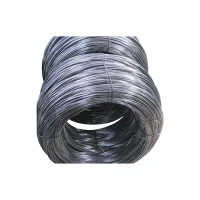
There are several key differences between coil nails and regular nails, which are mainly reflected in their structure, use, and performance. Here are some of the main differences between coil nails and regular nails:
1. Structural differences:
- Coil nails: Coil nails usually refer to a group of single nails and connectors of the same shape and arranged at equal distances. Their characteristic is that the nails are connected together in some way to form a continuous coiled structure.
- Regular nails: Regular nails usually refer to single, independent nails that are not connected together, and each nail needs to be used separately.
2. Differences in use:
- Coil nails: Coil nails are suitable for large-scale fast fixing work due to their continuous structure, such as fast fixing of wooden boards on construction sites or large-scale use in furniture manufacturing.
- Regular nails: Regular nails are more used for small-scale or delicate work, such as handicrafts, small furniture repairs, etc.
3. Performance differences:
- Coil nails: Due to the design of coil nails, they can provide stronger holding power and better fixing effects, especially in scenarios that require large-scale and fast fixing.
- Ordinary nails: Ordinary nails may not be as good as coil nails in terms of holding power and fixing effect, but they are more suitable for occasions that require precise control and small-scale use.
4. Efficiency difference:
- Coil nails: Using coil nails can improve work efficiency because they can be used quickly and continuously, reducing the time of placing and hammering individual nails one by one.
- Ordinary nails: Using ordinary nails may require more time and labor because each nail needs to be operated separately.
5. Cost difference:
- Coil nails: Although the unit price of coil nails may be higher than that of ordinary nails, the overall cost may be lower due to their high efficiency of use, especially in large-scale projects.
- Ordinary nails: Ordinary nails have a lower unit price and are suitable for projects with limited budgets or small-scale projects.
6. Applicability difference:
- Coil nails: Coil nails are suitable for scenes that require fast and large-scale fixing, such as construction, large-scale woodworking, etc.
- Ordinary nails: Ordinary nails are more suitable for occasions that require precise control and small-scale use, such as fine woodworking, handicraft production, etc.
In general, the choice of using coil nails or regular nails depends mainly on the specific application requirements, work efficiency requirements and cost budget.