

Common Nails
Why choose us?
Your Leading Common Nails Supplier
High Quality
The production process of nails is mature, the quality is stable and reliable, and the service life is long.
Rich Experience
With more than 20 years of experience, we specialize in the production of various specifications of threaded, ring-shaped and polished coil nails, and produce various conventional nails and non-standard nails.
Advanced Equipment
We have a mature production line. The machines include nail coiling machine, nail making machine, polishing machine, thread rolling machine
Quality Control
To ensure that our products and services meet our customers' expectations, we are proficient in production processes and strictly control quality.


what is Common Nails
Common nails are a type of steel nail that are often used for framing, carpentry, and other indoor construction projects. They are typically strong, stiff, and resistant to bending. Common nails have the following
Key advantages of common nails:
High strength:
Their thicker shank compared to other nail types provides superior holding power, making them suitable for structural work like framing.
Cost-effective:
Common nails are typically the most affordable option for general construction projects.
Wide range of applications:
They can be used for a variety of construction tasks including framing, siding, flooring, and rough carpentry.
Easy to drive:
The large flat head and sharp point make them simple to hammer in.
Available in various sizes:
Common nails come in different lengths to accommodate different wood thicknesses.
When to use common nails:
Framing walls and floors, Attaching structural lumber, Building exterior sheathing, and Rough carpentry work.
Types of Common Nails
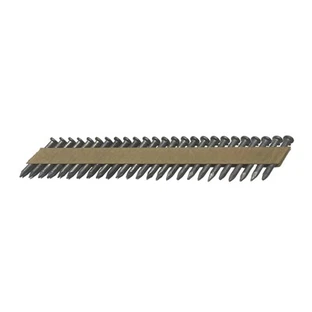
Common nails
These types of nails are the first choice for many framing, construction and carpentry jobs. The heavy shank provides sturdy support for framing and other rough work. The round head is visible on the surface. Use common nails when strength and function are more important than appearance.

Box nails
Although they look like common nails, they have thinner shanks. Box nails are less likely to split thinner pieces of wood. Their slender shaft also means they aren't as strong. They are often galvanized to help prevent corrosion.

Brad nails
Brads are made of 18-gauge wire. Their small size and head makes them a good choice for wood trim, moulding or other decorative wood surfaces. Their subtle appearance provides a clean finish in various woodworking projects.

Finishing nails
Finish nails are very thin and are made to disappear when hammered into wood. However, they are still strong enough to hold trim such as door jambs and crown moulding in place. They come in a variety of nail sizes.
Material of Common Nails

Steel
The most common material for nails, especially for construction.
Stainless steel
The most durable material for nails, especially for outdoor use. However, stainless steel nails are more expensive than galvanized or zinc-plated nails.
Galvanized
A coating that can be applied to nails to prevent rusting and increase holding power. Nails for outdoor use are often galvanized or hot-dipped with a zinc coating.
Other materials
Aluminum, brass, copper, nickel, and bronze nails are used in situations where corrosion may occur.
Application of Common Nails
1. Common Nails:
Common nails, also known as smooth nails, are the most basic type of nail. They have a simple, round head and a smooth shaft. These versatile nails are commonly used in general construction work, such as framing, carpentry, and woodworking. They offer good holding power and are suitable for a wide range of materials.
2. Finishing Nails:
Finishing nails, also called finish nails or brads, have a smaller, thinner diameter compared to common nails. They feature a small, rectangular head that can be easily concealed with putty or a wood filler, leaving no visible trace of the nail. Finishing nails are commonly used in finishing work, such as attaching trim, molding, or decorative elements to cabinets, furniture, and walls.
3. Drywall Nails:
Drywall nails, as the name suggests, are specifically designed for fastening drywall sheets to wooden studs or frames. They have a ringed or spiral shank, which provides a better grip and prevents the nail from pulling out over time. Drywall nails also have a large, flat head that helps secure the drywall firmly in place.
4. Flooring Nails:
As the name implies, flooring nails are used for installing various types of flooring materials, such as hardwood, engineered wood, or laminate. They have a barbed shank that offers excellent holding power, ensuring the floor remains stable and doesn't squeak. Flooring nails are specifically designed to penetrate through the hard surface of the flooring material without causing any damage.
5. Framing Nails:
Framing nails, also known as common wire nails, are heavy-duty nails designed for structural applications. They have a thick, sturdy shank that can withstand heavy loads and resist bending or breaking. Framing nails are used in tasks like framing walls, building decks, constructing roofs, and other structural projects.
6. Roofing Nails:
Roofing nails are specifically designed to secure roofing materials, such as asphalt shingles, metal sheets, or tiles, to the roof deck. They have a large, flat head and a short, wide shank. Roofing nails often have a rubber or plastic washer attached to their heads, providing a watertight seal that prevents water from penetrating through the roof.
7. Masonry Nails:
Masonry nails, also called concrete nails or cement nails, are used to attach materials to concrete, brick, or other masonry surfaces. They have a hardened steel shank that can penetrate through hard materials and offer good holding power. Masonry nails often have a fluted or grooved shank to improve their grip in masonry surfaces.
8. Panel Nails:
Panel nails, as the name suggests, are designed for fastening panels, such as plywood, particleboard, or other thin materials. They have a slender, ringed shank and a flat head that sits flush with the surface of the panel, reducing the risk of damage or injuries caused by protruding nails.
9. Box nail:
A box nail is a type of nail used for general woodworking applications. It is similar to a common nail, but with a squarer and more pronounced head. The name "box nail" comes from its historical use in the construction of wooden boxes. Box nails are typically made of steel and are available in various lengths and gauges, depending on the specific woodworking project. They are commonly used for framing, installing moldings, and joining pieces of wood together..
10. Duplex Nails:
Duplex nails, also called double-headed nails or scaffold nails, have two heads connected by a bar. They are primarily used in temporary applications, such as scaffolding or formwork, where quick and easy removal is necessary. The double-headed design allows for easy pulling and reusability without damaging the materials.
Components of Common Nails
Head
The flat surface on the back of the nail that you strike with a hammer. The head's purpose is to drive the nail in and to pin the material in place. There are many different types of nail heads, including flat, countersink, and checkered.
Shank
The long, thin section of the nail that runs from the head to the point. The shank provides most of the nail's strength and holding power.
Point
The section of the nail that penetrates the wood. The point is usually conical in shape, but it's actually made up of flat sections that help the nail split the fibers apart.

Key points for maintaining healthy nails:
Regular trimming:
Trim your nails regularly to a comfortable length using sharp nail clippers.
Moisturizing:
Apply hand lotion or cuticle oil to your nails and cuticles frequently, especially after washing your hands.
Protective gloves:
Wear gloves when doing chores that involve water or harsh chemicals to prevent damage to your nails.
Gentle cleaning:
Wash your hands with mild soap and water, gently scrubbing under your nails with a soft brush.
Avoid cuticle cutting:
Do not cut your cuticles, as they act as a protective barrier against infection.
Nail polish usage:
Apply a base coat before applying nail polish to protect your nails, and use a gentle nail polish remover.
Hydration:
Drink plenty of water to stay hydrated, which can also contribute to healthy nails.
What to avoid:
Nail biting: Biting your nails can damage the nail bed and surrounding skin.
Picking at hangnails: Instead of picking, carefully clip hangnails with clean nail clippers.
Aggressive filing: File your nails gently in one direction to avoid splitting.
Excessive soaking: Avoid prolonged exposure to water, which can weaken nails.
Factory Equipment


Our Certificate

Production Proces


FAQS
Q: Which nails are the most durable?
A: Stainless steel nails are the most durable nails, especially when used outside for projects like fences, decks, or sheds. But stainless steel nails are more expensive than galvanized nails or zinc-plated nails.
Q: What is the difference between framing and common nails?
A: Framing nail shanks are thinner and they have thin, almost flat heads. Common nails have a thicker nail shank and thicker heads.
Q: Are common nails good for wood?
A: Common nails work for general fastening projects, including construction work like framing and structural assemblies, as well as woodworking projects. These nails are best for fastening jobs where the strength of the nail matters more than the appearance.
Q: Are common nails made of steel?
A: Nails are usually made of steel but can also be made of stainless steel, iron, copper, aluminum, or bronze. The pointed end of a nail is called the point, the shaft is called the shank, and the flattened part is called the head.
Q: What is the difference between wire nails and common nails?
A: Aside from their production nuances, cut nails and wire nails differ in several ways. Cut nails have a blunt tip, whereas wire nails have a sharp tip. Cut nails are also larger than wire nails. The unique wedge-like shape of cut nails makes them ideal for construction applications involving masonry
We're well-known as one of the leading common nails manufacturers and suppliers in China. We warmly welcome you to buy high quality common nails for sale here from our factory. For more information, contact us now.