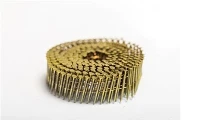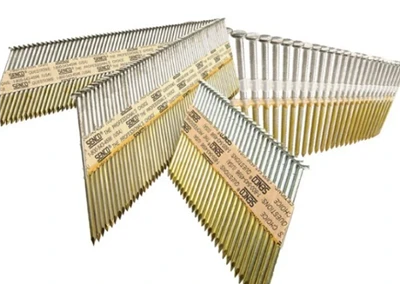
The material of the coil nails has a significant impact on its performance. Different materials determine the key characteristics of the coil nails such as strength, corrosion resistance, and electrical conductivity. The following are several common coil nail materials and their impact on performance:
1. Copper coil nails
Copper coil nails have good electrical conductivity and moisture-proof properties, and are easy to process and shape. However, copper coil nails are easily oxidized, have a relatively short service life, and are expensive.
2. Iron coil nails
Iron coil nails are hard and not easily deformed, and are cheap. They are widely used in construction, decoration, furniture and other fields. However, iron coil nails are easy to rust and have poor moisture resistance.
3. Stainless steel coil nails
Stainless steel coil nails have excellent corrosion resistance and durability and are suitable for various environments, especially those that require high corrosion resistance. The price of stainless steel coil nails is relatively high, but its excellent anti-corrosion properties and wide range of applications make it still popular.
4. Aluminum alloy coil nails
Aluminum alloy coil nails are lightweight, not easy to rust, have good corrosion resistance, and are suitable for use in humid and oxidizing environments. However, aluminum coil nails are relatively soft and have a narrow range of applications.
5. Plastic roll nails
Plastic coil nails are not easy to rust and are insulating, and are suitable for electronic products, toys and other fields. However, plastic coil nails have low bearing capacity, are easy to wear, and have limited scope of application.
To sum up, the choice of coil nail material should be determined according to the specific use environment and requirements. Different materials provide different performance combinations, and users need to consider these factors comprehensively when choosing.