

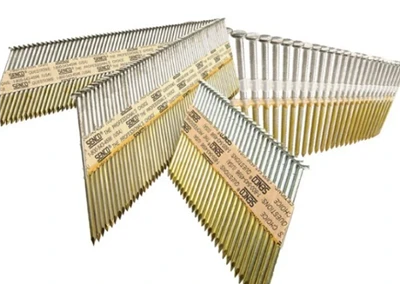
Coil nails play an important role in furniture manufacturing. They can not only improve production efficiency, but also ensure the quality and safety of furniture products. The following are the specific applications of coil nails in furniture manufacturing:
1. Splicing and fixing of wooden furniture
Coil nails are widely used in the splicing and fixing of wooden furniture, such as bed frames, bookcases, dining tables, etc. Due to the advantages of high strength and corrosion resistance, coil nails can improve production efficiency, reduce costs, and ensure product quality.
2. Connection and fixing of metal furniture
Metal furniture such as iron beds and metal chairs are also often connected and fixed with coil nails. In the production of custom furniture, coil nails can quickly and conveniently complete the assembly and fixing of various complex structures.
3. Special applications in the furniture manufacturing industry
In the furniture manufacturing industry, coil nails have other special uses. For example, K nails (code nails) are often used to fix sofa chairs, sofa covers and leather; ceilings and thin plates in the decoration industry are also often fixed with code nails; in the wooden box industry, outer thin plates are also often fixed with code nails.
4. Advantages and Challenges of Coil Nails
Although coil nails have many advantages in furniture manufacturing, they also face some challenges. With the increasing environmental protection requirements of the furniture industry, environmental issues in the production process of coil nails and the sustainability of raw materials have become the focus of attention. In addition, the quality and performance of coil nails must meet the requirements of relevant standards and specifications.
In summary, coil nails are widely used in furniture manufacturing. They can not only improve production efficiency, but also ensure the quality and safety of furniture products. However, with the increasing environmental protection requirements, the coil nail industry also needs to continue to innovate and develop to meet new market demands and technical requirements.


