

When it comes to construction and carpentry work, having the right tools can make all the difference. Two commonly used tools in these fields are roofing nailers and air nail guns. While they may seem similar at first glance, there are significant differences between them. As an air nail gun supplier, I'm here to shed light on these differences and help you understand which tool is best suited for your specific needs.
1. Definition and Basic Function
A roofing nailer is a specialized tool designed specifically for roofing applications. Its primary function is to quickly and efficiently attach roofing materials, such as shingles or roofing felt, to the roof deck. Roofing nailers are engineered to drive nails at a consistent depth and angle, ensuring a secure and long - lasting installation.
On the other hand, an air nail gun is a more versatile tool. It uses compressed air as a power source to drive nails into various materials, including wood, plastic, and metal. Air nail guns come in different types and sizes, each designed for specific tasks, such as framing, finishing, and siding.
2. Nail Types
One of the most significant differences between a roofing nailer and an air nail gun lies in the types of nails they use.
Roofing nailers typically use coil nails. These nails are connected in a coil, which allows for a large number of nails to be loaded into the nailer at once. Coil nails used in roofing nailers are usually short and have a wide head. The wide head provides a large surface area for holding the roofing material in place, preventing it from being lifted by wind or other forces.
Air nail guns, however, can use a variety of nail types depending on their intended use. For example, framing nail guns use larger, heavier nails to secure structural components together. These nails are often called framing nails and are typically longer and thicker than roofing nails. Finishing nail guns, on the other hand, use smaller, more delicate nails that leave a smaller hole in the material, making them ideal for trim work and other finishing touches.
3. Design and Construction
The design and construction of roofing nailers and air nail guns are also different.
Roofing nailers are designed to be lightweight and easy to maneuver on a roof. They often have a long, narrow body that allows the user to reach into tight spaces and drive nails at an angle. The magazine of a roofing nailer is typically designed to hold a coil of nails, and it is positioned in a way that allows for easy reloading while working on a roof.
Air nail guns come in a variety of designs. Framing nail guns are usually larger and heavier than roofing nailers, as they need to be able to drive large nails into thick materials. They often have a more robust construction to withstand the high - impact forces generated when driving nails. Finishing nail guns, on the other hand, are smaller and more lightweight, with a more precise trigger mechanism for accurate nail placement.
4. Power and Performance
In terms of power and performance, roofing nailers and air nail guns have different requirements.
Roofing nailers need to be powerful enough to drive nails through roofing materials and into the roof deck. However, they do not need to drive nails as deeply or with as much force as framing nail guns. Roofing nailers typically operate at a lower pressure than framing nail guns, which helps to prevent over - driving the nails and damaging the roofing material.
Air nail guns, especially framing nail guns, require a high amount of power to drive large nails into thick materials. They operate at a higher pressure and can deliver a more forceful blow, ensuring that the nails are driven all the way into the material. Finishing nail guns, while not as powerful as framing nail guns, still need to be precise in their operation to ensure a clean and professional finish.
5. Applications
The applications of roofing nailers and air nail guns are distinct.
As mentioned earlier, roofing nailers are primarily used for roofing projects. They are essential for installing shingles, roofing felt, and other roofing materials. Roofing nailers can significantly speed up the roofing process, making it more efficient and cost - effective.

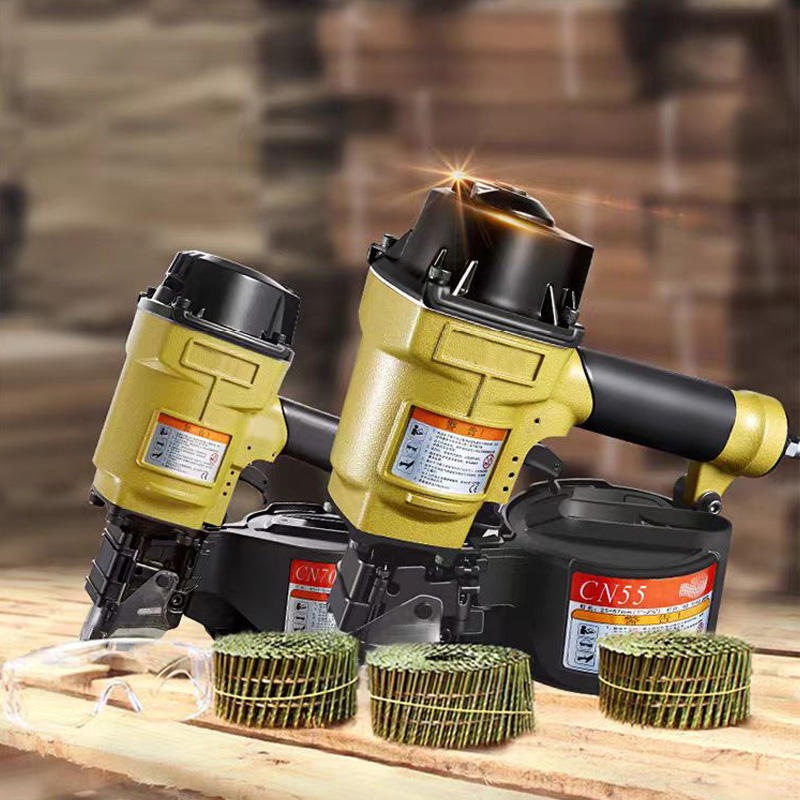
Air nail guns have a wider range of applications. Framing nail guns are used in the construction of buildings, including framing walls, floors, and roofs. They are also used in the assembly of pre - fabricated structures. Finishing nail guns are used for trim work, such as installing baseboards, crown molding, and window casings. Siding nail guns, a type of air nail gun, are used for installing siding materials on the exterior of buildings.
6. Our Air Nail Gun Products
As an air nail gun supplier, we offer a range of high - quality air nail guns to meet the needs of different customers.
Our Heavy Duty Coil Nailer is a powerful and reliable tool suitable for a variety of applications, including framing, sheathing, and decking. It uses coil nails and can operate at high pressure, delivering a strong and consistent nail drive.
The Cn80 Air Nail Gun is a versatile tool that can be used for both finishing and light - duty framing work. It is lightweight and easy to handle, making it a great choice for DIY enthusiasts and professional carpenters alike.
Our Cn55 Pneumatic Coil Siding Nailer is specifically designed for siding installation. It can drive nails quickly and accurately, ensuring a secure and professional - looking installation.
7. Conclusion and Call to Action
In conclusion, while roofing nailers and air nail guns share some similarities, they are designed for different purposes and have distinct features. Understanding the differences between these two tools is crucial for choosing the right tool for your project.
If you are in the market for an air nail gun, we invite you to explore our range of products. Our air nail guns are built to last, with high - quality components and reliable performance. Whether you are a professional contractor or a DIY enthusiast, we have the right air nail gun for your needs.
Contact us today to discuss your requirements and start a procurement negotiation. Our team of experts is ready to assist you in finding the perfect air nail gun for your projects.
References
- Black, J. (2018). Construction Tools Handbook. Publisher: ABC Publications.
- White, R. (2020). The Complete Guide to Nail Guns. Publisher: XYZ Books.