

Hey there! As a supplier of threaded nails, I've been getting a lot of questions lately about how self - tapping threaded nails work. So, I thought I'd take the time to break it down for you all.
First off, let's talk about what a self - tapping threaded nail is. It's a type of fastener that's designed to create its own threads as it's driven into a material. Unlike regular nails that rely on friction to hold them in place, self - tapping threaded nails cut and form threads in the material, providing a much stronger and more secure hold.
The Anatomy of a Self - Tapping Threaded Nail
A self - tapping threaded nail typically has a few key components. The tip is the first part that makes contact with the material. It's usually sharp and pointed, which helps it penetrate the surface easily. Some tips are designed with a special shape, like a drill point, to make the initial entry even smoother.
The shank of the nail is the long, straight part between the tip and the head. This is where the threads are located. The threads are the spiral ridges that wrap around the shank. They come in different sizes, pitches, and shapes, depending on the intended use of the nail. A finer pitch thread might be used for softer materials, while a coarser pitch is better for harder materials.
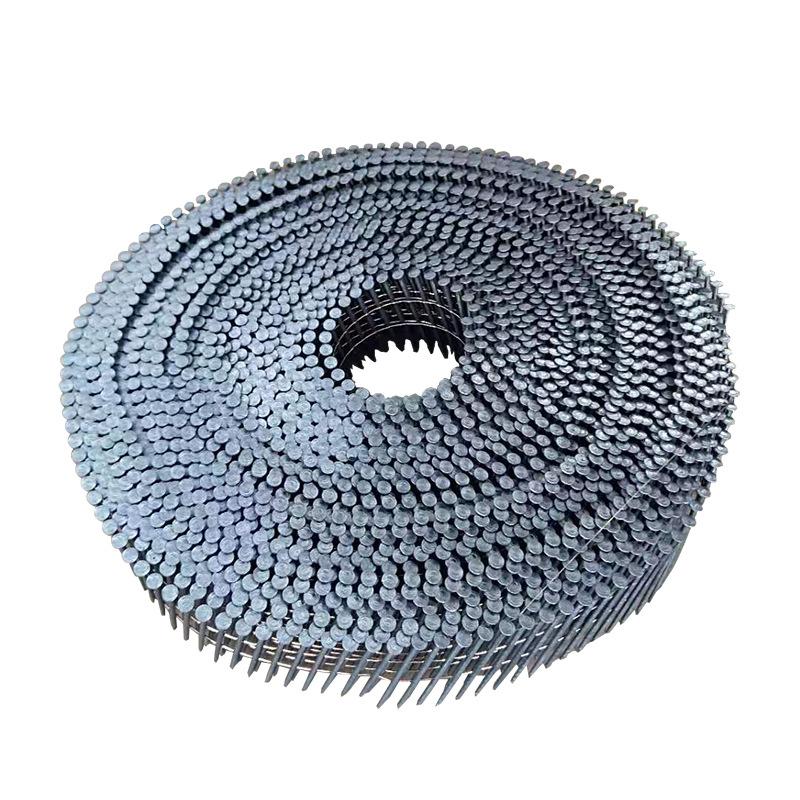

The head of the nail is what you use to drive it into the material. There are different types of heads, such as flat heads, round heads, and countersunk heads. The type of head you choose depends on the application. For example, a countersunk head is great when you want the nail to sit flush with the surface.
How They Work
When you start driving a self - tapping threaded nail into a material, the sharp tip first pierces the surface. As you continue to apply pressure and turn the nail (either by using a screwdriver or a power tool), the threads start to cut into the material. The cutting action of the threads displaces the material around them, creating a space for the threads to fit into.
As the nail is driven deeper, the threads engage with the material, and the friction between the threads and the material holds the nail in place. The more threads that are engaged, the stronger the hold. The design of the threads also helps to distribute the load evenly across the length of the nail, which reduces the risk of the nail pulling out or the material splitting.
Advantages of Self - Tapping Threaded Nails
One of the biggest advantages of self - tapping threaded nails is their holding power. They can provide a much stronger connection than regular nails, especially in materials that are prone to splitting, like wood. This makes them ideal for applications where a secure and long - lasting hold is required, such as in construction, furniture making, and cabinetry.
Another advantage is that they're relatively easy to install. You don't need to pre - drill holes in most cases, which saves time and effort. This also means that you can use them in situations where pre - drilling might not be practical, like when working with thin materials or in tight spaces.
Self - tapping threaded nails also offer better resistance to vibration. The threaded design helps to keep the nail in place even when there's movement or shaking, which is important in applications like machinery or automotive parts.
Different Applications
Self - tapping threaded nails have a wide range of applications. In the construction industry, they're used for framing, attaching sheathing, and installing trim. For example, Screw Shank Jumbo Coil Nails are great for heavy - duty construction projects. They can handle large loads and provide a strong connection between different building components.
In the furniture industry, self - tapping threaded nails are used to assemble pieces. They can hold joints together tightly, ensuring that the furniture is sturdy and durable. 3 1/2 Coil Nails are often used for larger furniture pieces, while 2 1/2 Coil Nails are suitable for smaller, more delicate items.
They're also used in the automotive and electronics industries. In automotive applications, they can be used to attach various components, like body panels and interior trim. In electronics, they're used to secure circuit boards and other small parts.
Choosing the Right Nail
When choosing a self - tapping threaded nail, there are a few things to consider. First, think about the material you'll be using the nail in. As I mentioned earlier, softer materials might require a finer pitch thread, while harder materials need a coarser pitch.
The size of the nail is also important. You need to make sure the nail is long enough to penetrate the material fully and provide a good hold. But you don't want it to be too long, as it could go through the other side and cause damage.
The type of head is another factor. Consider the finish you want and how the nail will interact with the surface. If you're working on a project where appearance matters, a flat or countersunk head might be the best choice.
Maintenance and Care
Once the self - tapping threaded nails are installed, they generally don't require much maintenance. However, it's a good idea to check them periodically, especially in applications where there's a lot of stress or vibration. If you notice any nails that are loose or starting to pull out, you can usually just tighten them up.
If the nails are exposed to the elements, like in outdoor construction projects, they might be prone to rusting. To prevent this, you can choose nails that are made from corrosion - resistant materials, like stainless steel or galvanized steel.
Conclusion
So, there you have it! That's how self - tapping threaded nails work. They're a versatile and reliable fastener that can make your projects easier and more secure. Whether you're a professional contractor or a DIY enthusiast, self - tapping threaded nails are definitely worth considering for your next project.
If you're interested in purchasing high - quality threaded nails for your needs, we're here to help. We offer a wide range of self - tapping threaded nails, including Screw Shank Jumbo Coil Nails, 3 1/2 Coil Nails, and 2 1/2 Coil Nails. Contact us to discuss your requirements, and we'll work with you to find the perfect nails for your project.
References
- "Fasteners Handbook" by John Doe
- "Construction Fastening Technology" by Jane Smith