

Hey there! As a supplier of Collated Framing Nails, I often get asked about how to measure the quality of these essential construction fasteners. It's a crucial question, especially for contractors, DIY enthusiasts, and anyone who relies on strong and reliable nails for their projects. In this blog, I'll share some key factors that can help you assess the quality of collated framing nails.
1. Material Quality
The first thing to consider is the material the nails are made from. High - quality collated framing nails are typically made from steel. But not all steels are created equal.
- Carbon Content: Nails with the right amount of carbon are stronger and more durable. Higher carbon content generally means greater hardness, which is important for nails that need to penetrate tough materials like hardwoods. A good quality nail should have a carbon content that is carefully balanced to provide both strength and some degree of flexibility to prevent brittleness.
- Alloy Additives: Some nails are made with alloy additives. For example, nails with small amounts of chromium or nickel can have better corrosion resistance. This is especially important if the nails will be used in outdoor or damp environments. If you're working on a deck or a fence, corrosion - resistant nails are a must to ensure the long - term integrity of the structure.
2. Nail Dimensions
Accurate dimensions are crucial for the performance of collated framing nails.
- Length: The length of the nail is a key factor. It needs to be long enough to penetrate the materials being joined and provide a secure hold. For example, when framing a wall, the nail should be long enough to go through the sheathing and into the studs. If the nail is too short, it won't hold the materials together properly, and if it's too long, it might poke through the other side or cause splitting.
- Diameter: The diameter, or gauge, of the nail affects its strength. Thicker nails are generally stronger and can handle more stress. However, using a nail that's too thick for the material can cause splitting. For most framing applications, a common nail gauge is around 10 - 16.
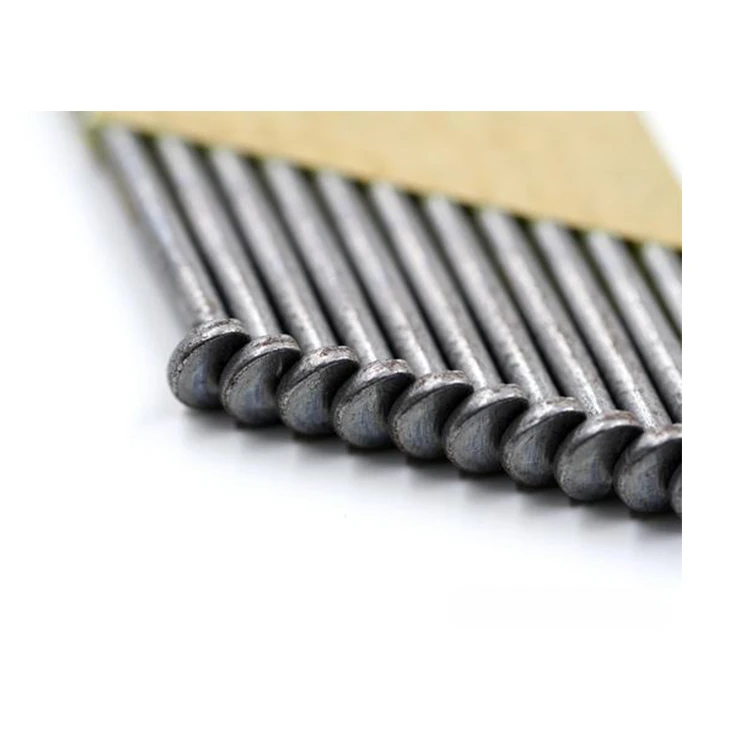
- Head Size: The size of the nail head also matters. A larger head provides more surface area to hold the material in place. It helps distribute the force when the nail is driven in and prevents the nail from pulling through the material.
3. Collation Quality
Since we're talking about collated framing nails, the way the nails are collated is an important quality factor.
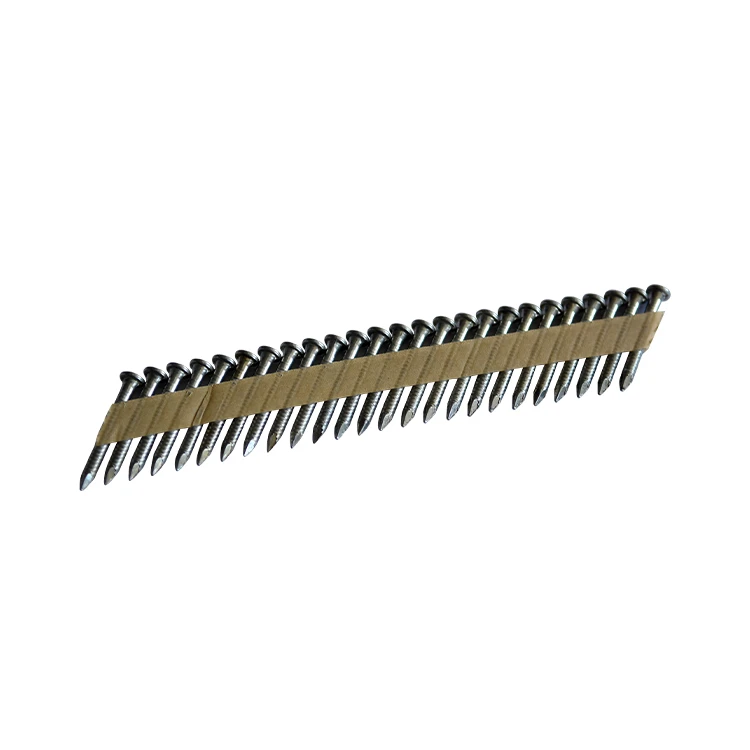
- Collation Method: There are different ways to collate nails, such as wire - weld and plastic strip collation.
- Wire - Weld Collation: 28 Degree Wire Weld Framing Nails are a popular choice. The wire - weld method involves welding the nails together with a thin wire. This type of collation is strong and reliable, allowing for smooth feeding in nail guns. It also holds the nails in place well during handling and driving.
- Plastic Strip Collation: Plastic strip - collated nails are also common. They are often more flexible than wire - weld collated nails, which can be an advantage in some nail guns. However, the plastic strip needs to be of good quality to prevent breakage during use.
- Collation Strength: The collation should be strong enough to hold the nails together during transportation and loading into the nail gun, but also allow the nails to separate easily when being driven. If the collation is too weak, the nails might come apart prematurely, causing jams in the nail gun. If it's too strong, the nails might not separate properly, leading to misfires.
4. Coating Quality
Many collated framing nails come with a coating, which can serve different purposes.
- Corrosion Resistance: As mentioned earlier, a coating can provide corrosion resistance. Bright Coated Framing Nails are often coated with a thin layer of zinc or other corrosion - resistant materials. Galvanized nails have a thicker zinc coating, which offers better protection in more corrosive environments.
- Driving Performance: Some coatings are designed to reduce friction when the nail is being driven. This can make it easier to drive the nail into the material and can also prevent the nail from getting stuck or bending. For example, a lubricious coating can help the nail slide through the wood more smoothly.
5. Point and Shank Design
The design of the nail point and shank can significantly affect its performance.
- Point Design: A sharp point is essential for easy penetration. Different point designs are available, such as diamond points and chisel points.
- Diamond Points: Diamond - pointed nails are very sharp and can penetrate hard materials easily. They are often used in applications where the nail needs to go through dense wood or other tough materials.
- Chisel Points: Chisel - pointed nails are flatter and wider at the tip. They are better for softer materials as they are less likely to split the wood.
- Shank Design: The shank of the nail can be smooth or have different types of ridges or threads.
- Smooth Shanks: Smooth - shank nails are easy to drive and are often used in applications where the nail needs to be removed later, such as in temporary structures.
- Ridged or Threaded Shanks: Nails with ridged or threaded shanks provide better holding power. The ridges or threads grip the material, preventing the nail from pulling out easily. This is ideal for permanent structures where a strong hold is required.
6. Testing and Certification
Reputable suppliers should test their collated framing nails to ensure they meet industry standards.
- Shear and Tensile Strength Testing: Nails should be tested for shear and tensile strength. Shear strength refers to the nail's ability to resist forces that try to cut it in half, while tensile strength is its ability to resist being pulled apart. High - quality nails should pass these tests to ensure they can handle the stresses they will encounter in real - world applications.
- Industry Standards: Look for nails that meet recognized industry standards, such as ASTM (American Society for Testing and Materials) standards. These standards ensure that the nails are manufactured to a certain quality level and perform as expected.
7. Compatibility with Nail Guns
Collated framing nails need to be compatible with the nail gun you're using.
- Angle and Size Compatibility: Different nail guns are designed to use nails at specific angles and sizes. For example, 21 - Degree Collated Framing Nails are designed for nail guns that accept 21 - degree nails. Using the wrong angle or size of nails can cause jams, misfires, and poor performance.
- Magazine Fit: The collation of the nails should fit properly into the nail gun magazine. If the nails are too wide or too long for the magazine, they won't feed correctly, leading to problems during operation.
Contact for Purchase
If you're in the market for high - quality collated framing nails, I'd love to have a chat with you. Whether you're a professional contractor working on large - scale projects or a DIYer tackling a home improvement task, I can help you find the right nails for your needs. Don't hesitate to reach out to discuss your requirements and start a purchase negotiation.
References
- ASTM International. (Year). Standard specifications for nails.
- Woodworking and Construction Handbooks. Various editions.