

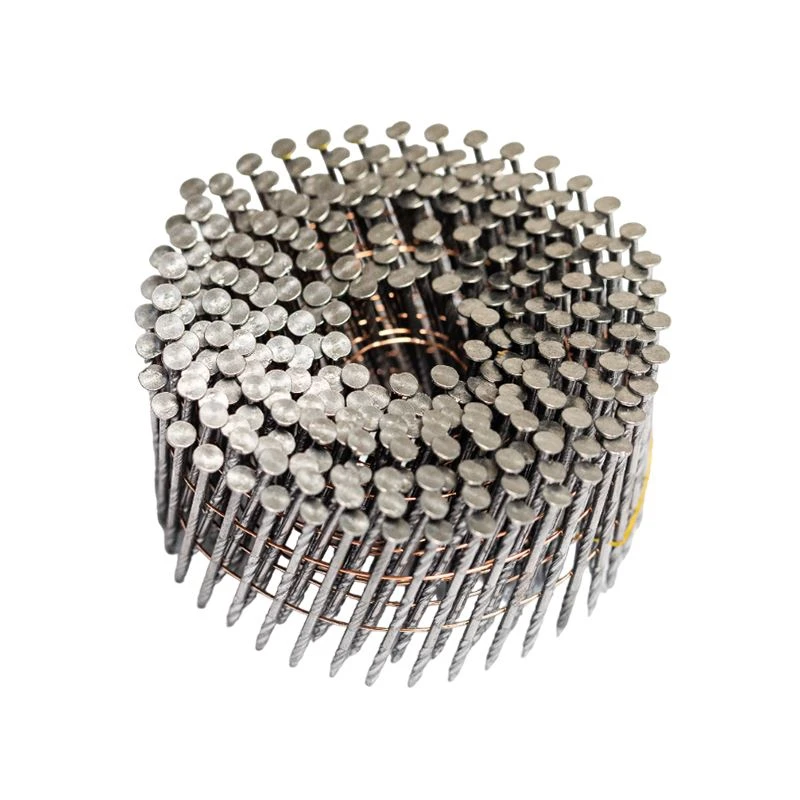
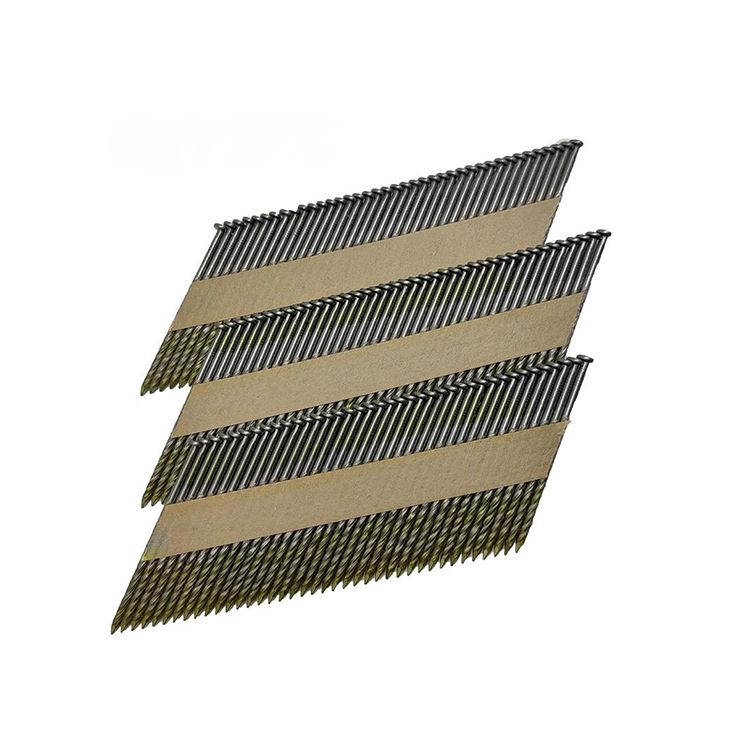
Collated framing nails are essential tools in the construction industry, used for a variety of framing applications. As a trusted supplier of collated framing nails, I understand the importance of providing customers with a wide range of sizes to meet their specific needs. In this blog post, I'll explore the different sizes of collated framing nails available and their typical uses.
Understanding Nail Sizes
Nail sizes are typically denoted by two main measurements: length and gauge. The length of a nail is straightforward - it's the distance from the tip to the head of the nail, usually measured in inches. The gauge, on the other hand, refers to the thickness of the nail. A lower gauge number indicates a thicker nail. For example, a 10 - gauge nail is thicker than a 16 - gauge nail.
Common Lengths of Collated Framing Nails
- 2 - inch Nails
- These are relatively short collated framing nails. They are often used for light - duty framing tasks, such as attaching small pieces of wood trim or for some indoor framing work where the load - bearing requirements are not high. For instance, when framing interior partitions in a residential building, 2 - inch collated framing nails can be a suitable choice.
- 2.5 - inch Nails
- This is a very popular length for many framing applications. They are commonly used in general framing work, like attaching wall studs to plates. The 2.5 - inch length provides a good balance between holding power and the ability to penetrate the wood without causing excessive splitting.
- 3 - inch Nails
- Three - inch collated framing nails are widely used in heavy - duty framing. They are ideal for framing exterior walls, floor joists, and roof trusses. The longer length ensures a stronger connection between the wooden components, which is crucial for the structural integrity of the building.
- 3.5 - inch Nails
- These extra - long nails are used for the most demanding framing jobs. When building large - scale structures or when dealing with thick wooden members, 3.5 - inch collated framing nails offer maximum holding power. For example, in commercial construction projects where large beams need to be joined, these nails are often the go - to choice.
Common Gauges of Collated Framing Nails
- 10 - Gauge Nails
- Ten - gauge collated framing nails are very thick and strong. They are typically used in high - stress applications where a large amount of force needs to be resisted. For example, in the construction of industrial buildings or in situations where heavy machinery will be installed on a framed structure, 10 - gauge nails can provide the necessary strength.
- 12 - Gauge Nails
- A popular choice for many framing projects, 12 - gauge nails offer a good combination of strength and ease of use. They can be used for a wide range of applications, from residential framing to some light - commercial work. The 12 - gauge thickness allows them to penetrate the wood effectively while still providing sufficient holding power.
- 14 - Gauge Nails
- These are thinner than 12 - gauge nails and are often used for less demanding framing tasks. They are suitable for projects where the load - bearing requirements are not as high, such as interior framing for non - load - bearing walls or for attaching small wooden components.
Angle and Collation Types
Collated framing nails also come in different angles and collation types, which can affect their performance and compatibility with nail guns.
- 28 Degree Wire Weld Framing Nails
- 28 Degree Wire Weld Framing Nails are a common type. The 28 - degree angle is designed to fit specific nail guns, and the wire weld collation holds the nails together in a strip. These nails are known for their reliable feeding in nail guns and are suitable for a variety of framing applications, especially in residential construction.
- 21 - Degree Collated Framing Nails
- 21 - Degree Collated Framing Nails are another popular option. The 21 - degree angle provides a different loading configuration in nail guns. They are often used in professional framing work due to their high - speed feeding capabilities and the ability to handle larger nail sizes.
- 21 Degree Plastic Framing Nails
- 21 Degree Plastic Framing Nails use plastic collation to hold the nails together. This type of collation is lightweight and can be more flexible in some nail guns. They are suitable for a range of framing tasks, including both residential and commercial construction.
Choosing the Right Size
When choosing the right size of collated framing nails for your project, several factors need to be considered:
- Wood Thickness
- The thickness of the wood being joined is a crucial factor. For thinner pieces of wood, shorter nails with an appropriate gauge should be used to prevent splitting. For thicker wood, longer and thicker nails are required to ensure a strong connection.
- Load - Bearing Requirements
- If the structure will be bearing a heavy load, such as a roof or a floor, stronger and longer nails should be used. For non - load - bearing partitions, lighter nails may be sufficient.
- Nail Gun Compatibility
- Different nail guns are designed to work with specific nail sizes, angles, and collation types. It's essential to choose nails that are compatible with your nail gun to ensure proper feeding and firing.
Conclusion
As a supplier of collated framing nails, I offer a comprehensive range of sizes, gauges, angles, and collation types to meet the diverse needs of the construction industry. Whether you're a professional contractor working on a large - scale commercial project or a DIY enthusiast building a small shed, we have the right nails for you.
If you're in the market for high - quality collated framing nails, I encourage you to get in touch with us for a detailed discussion about your specific requirements. Our team of experts can help you select the most suitable nails for your project and ensure a successful construction process.
References
- "Building Construction Handbook" by Roy Chudley and Roger Greeno
- "The Complete Guide to Framing" by Black & Decker