

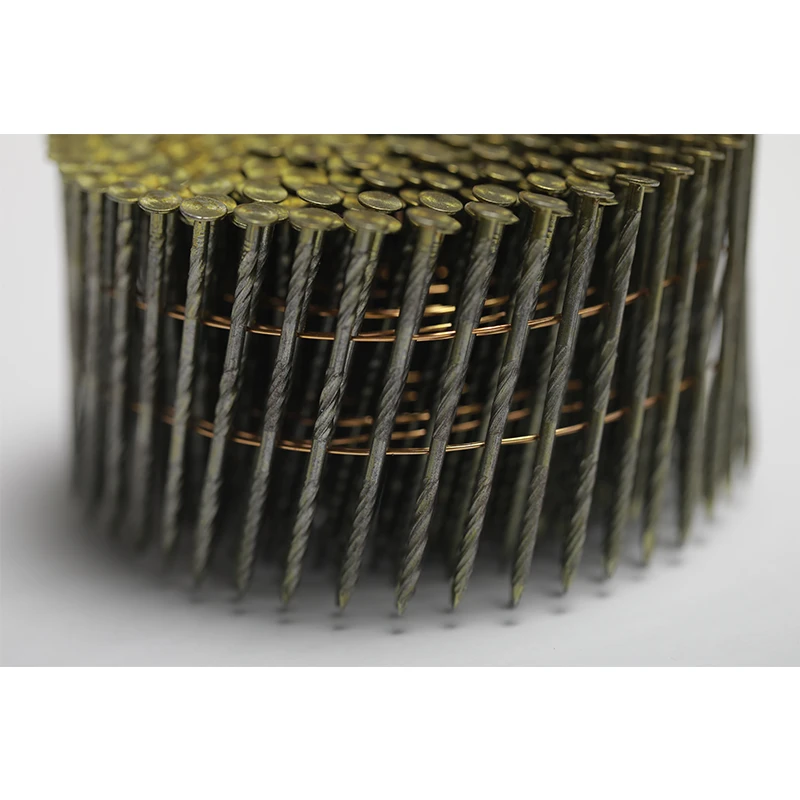
When it comes to construction and carpentry, the use of threaded nails is a common practice. Threaded nails, also known as screw shank nails, offer superior holding power compared to traditional smooth - shank nails. As a threaded nail supplier, I often get asked about the recommended spacing between these nails. In this blog, I'll delve into the factors that influence nail spacing and provide some general guidelines.
Factors Affecting Threaded Nail Spacing
1. Material of the Workpieces
The type of materials you are joining plays a crucial role in determining nail spacing. For instance, when working with softwoods like pine or cedar, the wood fibers are more forgiving. These woods can withstand a relatively closer nail spacing because they are less likely to split. On the other hand, hardwoods such as oak or maple are denser and more brittle. If nails are placed too close together in hardwoods, there is a high risk of splitting the wood. In such cases, a wider nail spacing is recommended.
2. Load - Bearing Requirements
The amount of weight or stress that the joint will bear is another important factor. In load - bearing applications, such as framing a house or building a heavy - duty structure, nails need to be spaced more closely to ensure the joint can handle the load. For non - load - bearing applications like installing trim or paneling, the nails can be spaced farther apart as the joint doesn't need to support as much weight.
3. Nail Size and Type
The size and type of threaded nails also impact the spacing. Larger nails generally provide more holding power, so they can be spaced farther apart compared to smaller nails. For example, our 2.5mmx57mm Screw Shank Coil Nails are suitable for lighter applications and may require a different spacing than our 3 1/2 Coil Nails, which are designed for more heavy - duty tasks.
General Spacing Guidelines
1. Framing Applications
In framing walls, floors, or roofs, a common rule of thumb is to space threaded nails about 6 - 12 inches apart along the edges of the framing members and 12 - 16 inches apart in the field. This spacing helps to distribute the load evenly across the joint and provides sufficient holding power to keep the structure stable. For example, when attaching wall studs to a bottom plate, nails should be placed at regular intervals to ensure the wall remains rigid.
2. Sheathing and Subflooring
When installing sheathing or subflooring, nails should be spaced closer together. A typical spacing for sheathing nails is 6 inches along the edges and 12 inches in the field. This close spacing helps to prevent the sheathing from buckling or moving under the weight of the structure or foot traffic.
3. Trim and Molding
For trim and molding work, a spacing of 8 - 12 inches is usually sufficient. Since trim is mainly for aesthetic purposes and doesn't bear much weight, a wider spacing can be used without sacrificing the integrity of the installation.

4. Decking
When building a deck, the spacing of threaded nails depends on the type of decking material. For composite decking, nails should be spaced about 12 - 16 inches apart. For wooden decking, a spacing of 6 - 12 inches is recommended, especially if the deck will be subject to heavy use.
Using Nail Guns with Threaded Nails
Many construction professionals prefer to use nail guns with threaded nails for efficiency. Our Screw Shank Nails For Nail Gun are specifically designed for this purpose. When using a nail gun, it's important to ensure that the nail spacing is consistent. Most nail guns have adjustable settings that allow you to control the distance between nails. However, it's still essential to follow the recommended spacing guidelines based on the application.
Importance of Proper Nail Spacing
Proper nail spacing is not just about following a set of rules; it has real - world implications for the quality and durability of your construction project. If nails are spaced too closely, it can lead to wood splitting, which weakens the joint. On the other hand, if nails are spaced too far apart, the joint may not have enough holding power, leading to structural failures over time. By adhering to the recommended nail spacing, you can ensure that your project will stand the test of time.
Conclusion
As a threaded nail supplier, I understand the importance of providing customers with the right information about nail spacing. The recommended spacing between threaded nails varies depending on several factors, including the material of the workpieces, load - bearing requirements, nail size, and the type of application. By considering these factors and following the general guidelines provided in this blog, you can make informed decisions about nail spacing for your construction projects.
If you have any questions about our threaded nails or need further advice on nail spacing, we are here to help. Whether you are a professional contractor or a DIY enthusiast, we can provide you with the high - quality threaded nails you need for your project. Feel free to reach out to us to discuss your specific requirements and start a procurement negotiation. We look forward to working with you on your next construction endeavor.
References
- "Building Construction Handbook" by Edward Allen and Joseph Iano
- "The Carpenter's and Builder's Handbook" by Frank R. Peterson
- Industry standards and guidelines from the American Wood Council