

In the construction and woodworking industries, the choice of fasteners is crucial for ensuring the structural integrity and longevity of projects. Among the various types of nails available, screw shank coil nails have gained significant popularity due to their superior holding power. As a trusted supplier of screw shank coil nails, I am excited to delve into the topic of what makes these nails so effective and why they are the preferred choice for many professionals.
Understanding Screw Shank Coil Nails
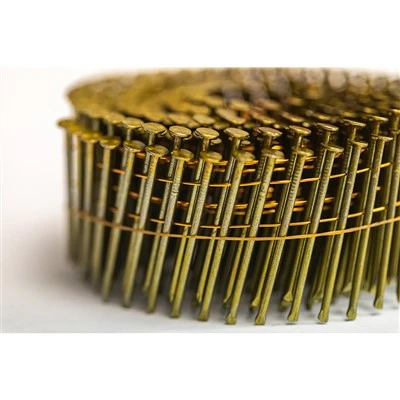
Screw shank coil nails are designed with a unique spiral or screw-like thread along the shank of the nail. This thread provides several advantages over traditional smooth-shank nails, including increased holding power, better resistance to withdrawal, and improved stability. The coil design allows for easy loading into nail guns, making them ideal for high-volume applications such as framing, roofing, and decking.

The Science Behind Holding Power
The holding power of a nail refers to its ability to resist withdrawal from the material it is driven into. This is determined by several factors, including the nail's diameter, length, shank design, and the type of material it is being used in. In the case of screw shank coil nails, the spiral thread plays a crucial role in enhancing holding power.
When a screw shank coil nail is driven into a material, the thread creates a series of interlocking ridges and grooves that grip the surrounding material tightly. This friction between the nail and the material helps to prevent the nail from pulling out, even under significant stress. Additionally, the spiral design of the thread allows the nail to self-tap as it is driven, creating a more secure fit and reducing the risk of splitting the material.
Advantages of Screw Shank Coil Nails
- Increased Holding Power: As mentioned earlier, the spiral thread of screw shank coil nails provides superior holding power compared to smooth-shank nails. This makes them ideal for applications where a strong and secure connection is required, such as in framing and roofing.
- Better Resistance to Withdrawal: The interlocking ridges and grooves created by the spiral thread help to prevent the nail from pulling out, even under extreme conditions. This makes screw shank coil nails more reliable and durable than traditional nails.
- Improved Stability: The self-tapping action of the spiral thread allows the nail to create a more secure fit, reducing the risk of movement or loosening over time. This helps to ensure the stability and integrity of the structure.
- Reduced Splitting: The spiral design of the thread helps to distribute the force evenly as the nail is driven, reducing the risk of splitting the material. This makes screw shank coil nails suitable for use in a wide range of materials, including softwoods, hardwoods, and engineered wood products.
- High-Volume Applications: The coil design of screw shank coil nails allows for easy loading into nail guns, making them ideal for high-volume applications. This helps to increase productivity and efficiency on the job site.
Applications of Screw Shank Coil Nails
Screw shank coil nails are versatile fasteners that can be used in a variety of applications, including:
- Framing: Screw shank coil nails are commonly used in framing applications to secure studs, joists, and rafters. Their superior holding power and resistance to withdrawal make them ideal for creating strong and stable structures.
- Roofing: In roofing applications, screw shank coil nails are used to attach shingles, underlayment, and roofing felt. Their ability to resist wind uplift and provide a secure connection helps to ensure the integrity of the roof.
- Decking: Screw shank coil nails are also popular for decking applications, as they provide a strong and secure connection between the deck boards and the joists. Their resistance to corrosion and weathering makes them suitable for outdoor use.
- Fencing: Screw shank coil nails can be used to secure fence panels, pickets, and posts. Their holding power and durability make them ideal for creating long-lasting fences.
- General Construction: In addition to the above applications, screw shank coil nails can be used in a variety of other general construction projects, such as installing siding, trim, and sheathing.
Our Product Range
As a leading supplier of screw shank coil nails, we offer a wide range of products to meet the needs of our customers. Our product range includes:
- Coil Nails Yellow Coated Screw Shank: These nails are coated with a yellow zinc alloy for added corrosion resistance. They are available in a variety of sizes and lengths to suit different applications.
- 2.1mmx32mm/2.1mmx38mm Conical (dome) Screw Shank Wire Coil Nails: These nails feature a conical (dome) head design, which provides a flush finish and reduces the risk of splitting the material. They are commonly used in roofing and siding applications.
- Screw Shank Roofing Nails: These nails are specifically designed for roofing applications. They have a sharp point and a spiral thread for easy penetration and increased holding power.
Contact Us for Your Screw Shank Coil Nail Needs
If you are in the market for high-quality screw shank coil nails, look no further. As a trusted supplier, we are committed to providing our customers with the best products and services. Whether you are a professional contractor or a DIY enthusiast, we have the right nails for your project.
Contact us today to discuss your specific requirements and to learn more about our product range. Our knowledgeable and friendly team will be happy to assist you and provide you with a competitive quote. We look forward to working with you and helping you achieve your construction goals.
References
- "The Building Code Illustrated: A Guide to the 2015 International Building Code" by Francis D.K. Ching and Steven R. Winkel
- "Wood Construction and Building Envelopes: A Guide to Residential and Light Commercial Construction" by John W. Hall and Joseph G. O'Rourke
- "The Complete Guide to Framing" by Black & Decker
- "Roofing: A Complete Guide to Installation and Repair" by Home Improvement Encyclopedia