

Hey there! As a supplier of Smooth Coil Nails, I often get asked about the difference between smooth coil nails and roofing nails. It's a question that's super important, especially if you're in the construction or DIY game. So, let's dive right in and break it down.
Appearance and Structure
First off, let's talk about how they look. Smooth coil nails, as the name suggests, have a smooth shank. They come in a coil form, which is great because it allows for easy loading into a nail gun. This coil design makes them really efficient for high - volume nailing jobs. You can find different types of smooth coil nails on our website, like Chisel Point Smooth Coil Nails. The chisel point gives them a sharp edge, which helps in penetrating materials more easily.

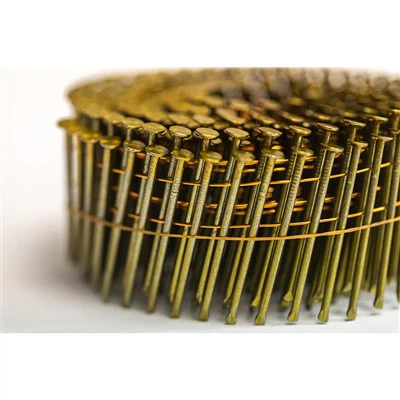
On the other hand, roofing nails are a bit different. They usually have a large, flat head. This big head is designed to hold down roofing materials like shingles firmly. The shank of a roofing nail can be smooth or have some sort of ring or spiral pattern. The ring or spiral shank helps to increase the holding power, but there are also smooth - shanked roofing nails available.
Material and Coating
When it comes to materials, both smooth coil nails and roofing nails are commonly made from steel. But the type of steel and the coatings can vary.
Smooth coil nails can be made from different grades of steel depending on the application. Some are made from softer steel for lighter - duty jobs, while others are made from high - carbon steel for more heavy - duty tasks. We also offer Coil Nail Yellow Coated Smooth Shank. The yellow coating is often a zinc - based coating that provides some corrosion resistance. It's a good option for jobs where the nails might be exposed to the elements a bit.
Roofing nails, on the other hand, usually need to be more corrosion - resistant because they're going to be on the roof, exposed to rain, snow, and sunlight. Many roofing nails are galvanized, which means they have a thick layer of zinc coating. This zinc coating helps to prevent rusting and extends the lifespan of the nails. Some high - end roofing nails may even have additional coatings for extra protection.
Applications
Now, let's talk about where these nails are used.
Smooth coil nails are extremely versatile. They're commonly used in framing, sheathing, and other structural applications. In framing, they can be used to connect wooden studs, joists, and beams. Their smooth shank allows them to be driven in quickly and easily, and they provide a strong connection. They're also great for sheathing, which is the process of covering the exterior of a building with plywood or other panels. And if you have a non - standard project, we've got Non - standard Smooth Coil Nails that can be customized to fit your needs.
Roofing nails, as the name implies, are mainly used for roofing. They're used to attach shingles, underlayment, and other roofing materials to the roof deck. The large head of the roofing nail ensures that the shingles stay in place, even in high winds. You wouldn't want to use smooth coil nails for roofing because their small heads might not hold the shingles firmly enough, and they may not have the necessary corrosion resistance.
Holding Power
Holding power is another key difference between the two.
Smooth coil nails rely on the friction between the nail and the material to hold things together. In some cases, the smooth shank can make them easier to drive in, but it also means that they may not have as much holding power as nails with a textured shank. However, in many structural applications, the sheer number of nails used and the strength of the wood or other materials they're driven into can compensate for this.
Roofing nails, especially those with ring or spiral shanks, have a much higher holding power. The ring or spiral pattern on the shank creates more surface area for the nail to grip the material. This is crucial for roofing, where the nails need to withstand the forces of wind, rain, and temperature changes without coming loose.
Driving Ease
Driving smooth coil nails is generally a breeze, especially when using a nail gun. The smooth shank allows the nail to slide through the material easily, and the coil design makes for quick and continuous nailing. You can drive a lot of nails in a short amount of time, which is great for large - scale projects.
Roofing nails can be a bit more challenging to drive, especially if they have a ring or spiral shank. The textured shank creates more resistance, which means you may need a more powerful nail gun or a bit more force when using a hammer. However, modern nail guns are designed to handle roofing nails effectively, so it's not too much of an issue.
Cost
Cost is always a factor when choosing between different types of nails.
Smooth coil nails are usually more affordable, especially for large - quantity purchases. Their simple design and manufacturing process make them cost - effective for many construction projects.
Roofing nails, especially those with high - quality coatings and enhanced holding power, can be more expensive. The additional materials and manufacturing processes required to make them corrosion - resistant and provide a high holding power drive up the cost. But when it comes to protecting your roof, it's often worth investing in good - quality roofing nails.
Conclusion
In conclusion, smooth coil nails and roofing nails are two different types of nails with distinct characteristics and applications. Smooth coil nails are great for general construction and structural work, offering versatility and ease of use. Roofing nails, on the other hand, are specifically designed for roofing applications, with features like large heads and high holding power to ensure the durability of your roof.
If you're in the market for smooth coil nails, whether it's for a small DIY project or a large - scale construction job, I'd love to talk to you. We offer a wide range of smooth coil nails, including the ones I've mentioned above. Just reach out, and we can discuss your specific needs and find the perfect nails for your project.
References
- "Building Construction Handbook" by Edward Allen and Joseph Iano
- "Roofing Materials and Installation Guide" by a leading roofing industry association