

Hey there, folks! As an air nail gun supplier, I often get asked about the difference between a flooring nailer and an air nail gun. It's a great question, and today, I'm gonna break it down for you in a way that's easy to understand.
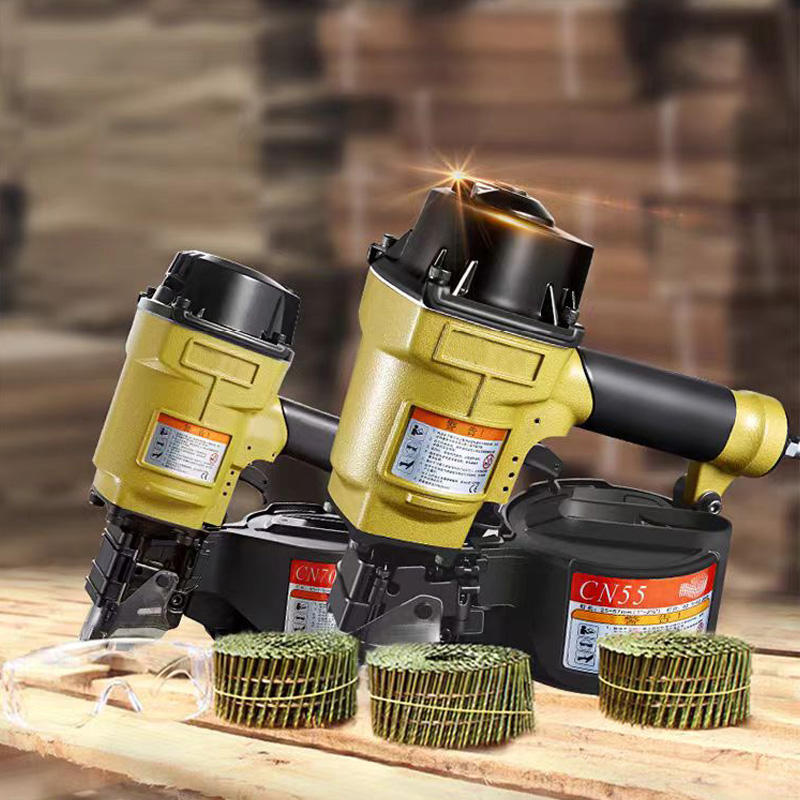
First off, let's talk about air nail guns in general. Air nail guns, also known as pneumatic nail guns, are super popular in the construction and DIY world. They're powered by compressed air, which gives them the force to drive nails into various materials quickly and efficiently. We offer a wide range of air nail guns, like the Pneumatic Coil Nail Gun, the Heavy Duty Fence Coil Nailer, and the Industrial Coil Nail Gun. These guns are versatile and can be used for different tasks, from framing to installing trim.
Now, let's get into the flooring nailer. A flooring nailer is a specialized type of nail gun designed specifically for installing flooring materials, such as hardwood, laminate, or engineered wood. It has a few key features that set it apart from a regular air nail gun.
Design and Function
One of the main differences is in the design. Flooring nailers are typically smaller and more compact than regular air nail guns. This is because they need to be maneuverable in tight spaces, like under cabinets or along walls. They also have a unique firing mechanism that allows them to drive nails at an angle, usually around 15 to 17 degrees. This angled nail placement helps to secure the flooring boards together tightly, preventing gaps and squeaks.
On the other hand, air nail guns come in various sizes and shapes, depending on their intended use. Some are large and powerful for heavy-duty framing work, while others are smaller and more lightweight for finishing tasks. They usually fire nails straight into the material, which is suitable for tasks like attaching boards to a frame or installing trim.

Nail Types
Another significant difference is the type of nails used. Flooring nailers use special flooring nails that are designed to hold the flooring boards in place without splitting or damaging the wood. These nails are typically thin and have a small head, which allows them to be countersunk into the wood for a smooth finish. The length of the nails can vary depending on the thickness of the flooring material.
Air nail guns, on the other hand, can use a variety of nail types, including brads, finish nails, framing nails, and coil nails. The type of nail used depends on the specific task and the material being worked on. For example, framing nails are thick and strong, suitable for building structures, while brads are thin and used for delicate finishing work.
Application
The application is where the difference becomes most obvious. Flooring nailers are used exclusively for installing flooring. They are designed to provide a secure and professional-looking installation, ensuring that the flooring lasts for years to come. Whether you're a professional installer or a DIY enthusiast, a flooring nailer is a must-have tool for any flooring project.
Air nail guns, on the other hand, have a much wider range of applications. They can be used for framing houses, building decks, installing cabinets, and even making furniture. Their versatility makes them a popular choice among contractors and DIYers alike.
Power and Performance
In terms of power, flooring nailers are usually less powerful than heavy-duty air nail guns. Since they are designed for lighter materials like flooring, they don't need as much force to drive the nails. However, they still need to be powerful enough to ensure a secure installation. Most flooring nailers operate at a lower air pressure, typically between 70 and 120 PSI.
Air nail guns, especially those used for framing, can operate at much higher air pressures, sometimes up to 150 PSI or more. This high pressure allows them to drive large nails into thick materials with ease.
Cost
Cost is also a factor to consider. Flooring nailers tend to be more expensive than regular air nail guns. This is because they are specialized tools with unique features and are designed for a specific purpose. However, if you're planning to install a lot of flooring, the investment in a good-quality flooring nailer is definitely worth it.
Air nail guns, on the other hand, come in a wide range of prices, depending on their size, power, and features. You can find basic models for a relatively low cost, while high-end professional-grade guns can be quite expensive.
Maintenance
Maintenance is important for both types of nail guns. Flooring nailers require regular cleaning and lubrication to ensure smooth operation. Since they are used with flooring materials, they can collect dust and debris, which can affect their performance. It's also important to check the nail magazine regularly to make sure it's free of jams.
Air nail guns also need regular maintenance, including cleaning, lubrication, and checking for any loose parts. They may be exposed to more dust and debris on construction sites, so it's even more important to keep them clean and well-maintained.
In conclusion, while both flooring nailers and air nail guns are powered by compressed air and used for driving nails, they have distinct differences in design, nail types, application, power, cost, and maintenance. If you're working on a flooring project, a flooring nailer is the way to go. But if you need a versatile tool for a variety of tasks, an air nail gun is a better choice.
If you're interested in purchasing an air nail gun or have any questions about our products, feel free to reach out. We're here to help you find the right tool for your needs and ensure that you get the best performance and value for your money. Let's start a conversation and see how we can work together on your next project!
References
- "Nail Guns: A Comprehensive Guide." Home Improvement Magazine.
- "Flooring Installation Techniques." Flooring World Journal.
- "Pneumatic Tools: Power and Performance." Tool Technology Review.