

Hey there! As a supplier of collated framing nails, I often get asked about the corrosion resistance of these handy little fasteners. So, let's dive right in and explore what makes collated framing nails resistant to corrosion and why it matters.
First off, let's understand what corrosion is. In simple terms, corrosion is the process by which metals are gradually destroyed by chemical reactions with their environment. For nails, this usually means exposure to moisture, oxygen, and other chemicals in the air or the materials they're driven into. When nails corrode, they can lose their strength, become brittle, and eventually fail, which can compromise the integrity of the structure they're holding together.
Now, when it comes to collated framing nails, there are several factors that contribute to their corrosion resistance. One of the most important is the type of coating used on the nails. Different coatings offer varying levels of protection against corrosion, and choosing the right one depends on the specific application and the environmental conditions the nails will be exposed to.
Types of Coatings and Their Corrosion Resistance
Bright Coated Framing Nails
Bright coated nails are the most basic type of collated framing nails. They have a thin layer of zinc or another metal applied to the surface to provide some protection against rust. However, this coating is relatively thin and may not offer long - term protection in harsh environments. These nails are typically used in indoor applications where the risk of corrosion is low. You can check out our Bright Coated Framing Nails for more details.
Galvanized Coating
Galvanized nails are coated with a thicker layer of zinc, which provides much better corrosion resistance than bright coated nails. The zinc acts as a sacrificial anode, meaning it corrodes before the underlying steel nail. This process is called galvanic protection. Galvanized nails are suitable for outdoor applications, such as building decks, fences, and outdoor structures, where they will be exposed to moisture and the elements.
Hot - Dipped Galvanized Coating
Hot - dipped galvanized nails go through an even more intensive coating process. The nails are dipped in a bath of molten zinc, which results in a very thick and durable zinc coating. This type of coating offers excellent corrosion resistance and is ideal for use in extremely harsh environments, like coastal areas where there is a high salt content in the air.
Stainless Steel Coating
Stainless steel nails are the most corrosion - resistant option. They are made from an alloy that contains chromium, which forms a passive oxide layer on the surface of the nail. This layer protects the nail from corrosion and makes it highly resistant to rust, even in the most aggressive environments. Stainless steel collated framing nails are often used in applications where long - term durability and corrosion resistance are critical, such as in marine construction or in areas with high humidity and chemical exposure.
Other Factors Affecting Corrosion Resistance
Apart from the coating, the environment in which the nails are used also plays a significant role in their corrosion resistance. For example, if the nails are used in a damp or wet environment, they are more likely to corrode, regardless of the coating. Similarly, exposure to chemicals, such as acids or salts, can accelerate the corrosion process.
The type of wood or material the nails are driven into can also affect corrosion. Some woods, like cedar and redwood, contain natural oils and chemicals that can be corrosive to nails over time. In such cases, it's important to choose nails with a high level of corrosion resistance.

Why Corrosion Resistance Matters
The corrosion resistance of collated framing nails is crucial for several reasons. Firstly, it ensures the structural integrity of the building or structure. Corroded nails can lose their holding power, which can lead to joints coming loose and the structure becoming unstable. This can be a safety hazard, especially in buildings where people live or work.
Secondly, corrosion - resistant nails can save you money in the long run. While they may be more expensive upfront, they last longer and require less maintenance. You won't have to worry about replacing corroded nails or dealing with the damage caused by corrosion, which can be costly and time - consuming.
Our Product Range
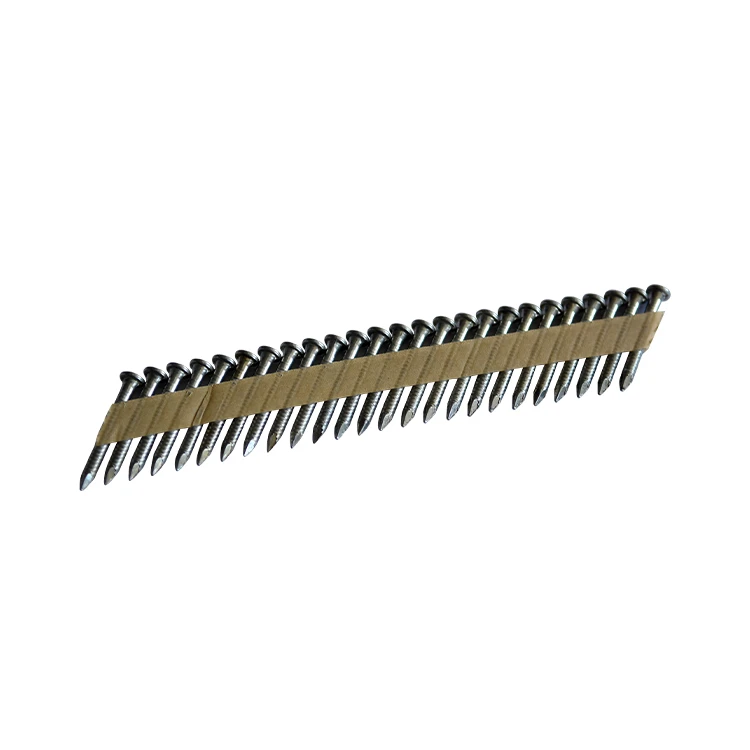
At our company, we offer a wide range of collated framing nails with different levels of corrosion resistance to meet the needs of various applications. Our 30 Degree Framing Nails are available in different coatings, including galvanized and stainless steel, making them suitable for both indoor and outdoor use.
We also have 21 Degree Plastic Collated Nails. These nails are designed for use with specific nail guns and come with a plastic collation that holds the nails together. They are available in different corrosion - resistant coatings, so you can choose the right one for your project.
Conclusion
In conclusion, the corrosion resistance of collated framing nails is an important factor to consider when choosing the right nails for your project. The type of coating, the environment, and the material the nails are used with all play a role in determining how well the nails will resist corrosion. By choosing the right nails with the appropriate level of corrosion resistance, you can ensure the long - term durability and safety of your construction projects.
If you're interested in learning more about our collated framing nails or have any questions about corrosion resistance, feel free to reach out. We're here to help you make the best choice for your project and can provide you with all the information you need to make an informed decision. Whether you're a professional contractor or a DIY enthusiast, we've got the right nails for you. So, don't hesitate to contact us for procurement and let's discuss how we can meet your needs.
References
- "Corrosion of Metals" by the NACE International.
- "Building Materials and Construction" textbooks.