

Hey there, folks! As a supplier of smooth coil nails, I've had my fair share of customers asking how these bad boys stack up against common nails. So, I thought I'd take a few minutes to break it down for y'all and give you the lowdown on what makes smooth coil nails a great choice.
Let's start with the basics. What are smooth coil nails and common nails? Well, common nails are what you've probably used a million times. They're the classic, straight nails with a flat head. You can find them in most hardware stores, and they're pretty much a staple in construction and DIY projects. They've been around forever, and they get the job done, no doubt about it.
On the other hand, smooth coil nails are a bit different. They're coiled up, hence the name, which allows them to be used in nail guns. This is a huge advantage because it speeds up the nailing process like crazy. Instead of hammering each nail in one by one, you can fire them off quickly with a nail gun. And yes, the smooth part means the shank of the nail is, well, smooth!
1. Installation Speed
One of the biggest differences between smooth coil nails and common nails is the installation speed. Using common nails is like a manual process. You have to hold the nail in place and swing that hammer. It might be a good workout, but it's time - consuming! I mean, if you're working on a small project like hanging a picture frame, it's not a big deal. But for larger construction jobs, like building a deck or framing a house, you're looking at hours upon hours of hammer - swinging.
In contrast, smooth coil nails are made for nail guns. I've seen crews go from spending days on a framing job with common nails to finishing it in just a fraction of the time with smooth coil nails and a nail gun. You load up the coil, point and shoot. It's as simple as that. It boosts productivity big time, and in the construction world, time is money.
2. Holding Power
Now, let's talk about holding power. Common nails have a pretty decent grip, especially when they're driven deep into the wood. The rough texture of the common nail shank helps it bite into the wood fibers, creating a strong connection. But here's the thing: the holding power can be inconsistent. If the wood is a bit dry or brittle, or if you don't drive the nail in straight, the hold might not be as strong as you'd like.
Smooth coil nails, however, have a different approach to holding power. While the smooth shank might make you think they won't hold as well, modern manufacturing techniques have changed that. The nails are designed to be driven in with enough force by the nail gun to create a tight fit in the wood. And because they're often used in larger - scale projects, multiple nails are used in close proximity, distributing the load evenly. This results in a very secure hold. For example, in a deck, the smooth coil nails can keep the boards firmly in place, even under heavy foot traffic.
3. Versatility
Common nails are super versatile. You can use them for all sorts of projects, from simple home repairs to more complex woodworking. They're available in a wide range of sizes, so you can pick the right one for the job. Whether you're nailing a small wooden box or building a shed, there's a common nail that'll work.
Smooth coil nails are also versatile, but in a slightly different way. They're mainly used in construction and large - scale carpentry projects. They're perfect for framing, sheathing, and decking. And because they're designed for nail guns, they're often used in professional settings where speed and efficiency are key. You can check out our Coil Nail Yellow Coated Smooth Shank for a great option that's suitable for many construction projects.
4. Cost
Cost is always a factor when you're choosing between different types of nails. Common nails are generally cheaper, especially if you're buying them in small quantities. They're mass - produced, and the manufacturing process is relatively simple, which keeps the cost down.
Smooth coil nails, on the other hand, can cost a bit more. The coiling process and the fact that they're often used with nail guns add to the overall cost. But when you consider the time and labor savings they offer, the extra cost can be well worth it. For large - scale projects, the increased productivity can actually end up saving you money in the long run.
5. Durability
Durability is crucial, especially in outdoor projects. Common nails can rust over time, especially if they're not made of a rust - resistant material. This can weaken the connection and cause problems in the long term. You might have to replace them or deal with a structure that's not as stable as it should be.
Smooth coil nails can be made with different coatings to enhance their durability. For example, our Chisel Point Smooth Coil Nails are designed to be more resistant to corrosion. The coating protects the nail from the elements, ensuring that it lasts longer and maintains its holding power.

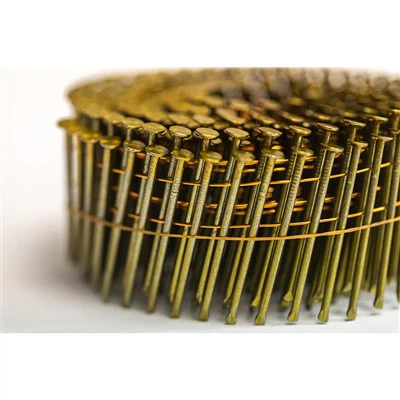
Specialized Options
We also offer Non - standard Smooth Coil Nails for those unique projects. Maybe you're working with a special type of wood or a non - traditional construction method. These non - standard nails can be customized to meet your specific needs.
Conclusion
So, to sum it all up, both smooth coil nails and common nails have their pros and cons. Common nails are great for small, DIY projects, and they're budget - friendly. But if you're working on a large - scale construction job, smooth coil nails are the way to go. They offer faster installation, good holding power, and are more durable in many cases.
If you're in the market for smooth coil nails, I'd love to talk to you about your project. Whether you need a small quantity for a home renovation or a large order for a commercial construction job, I can help you find the right nails. Just reach out, and we can discuss your requirements and get you the best deal possible.
References
- Construction materials textbooks on nail types and their applications
- Industry research on the efficiency and cost - effectiveness of different nail products