

When it comes to construction projects, especially those in coastal areas or near salt - water environments, the choice of fasteners is crucial. As a supplier of collated framing nails, I've encountered numerous inquiries regarding how these nails hold up in salt - water conditions. In this blog, I'll delve into the science behind it, discuss different types of collated framing nails, and share insights based on real - world experiences.
The Challenge of Salt - Water Environments
Salt - water is a highly corrosive medium. The combination of water, oxygen, and dissolved salts creates an environment where metal corrosion occurs at an accelerated rate. When collated framing nails are exposed to salt - water, the metal in the nails reacts with the oxygen in the presence of the salt solution. This electrochemical reaction leads to the formation of rust, which weakens the nails over time.
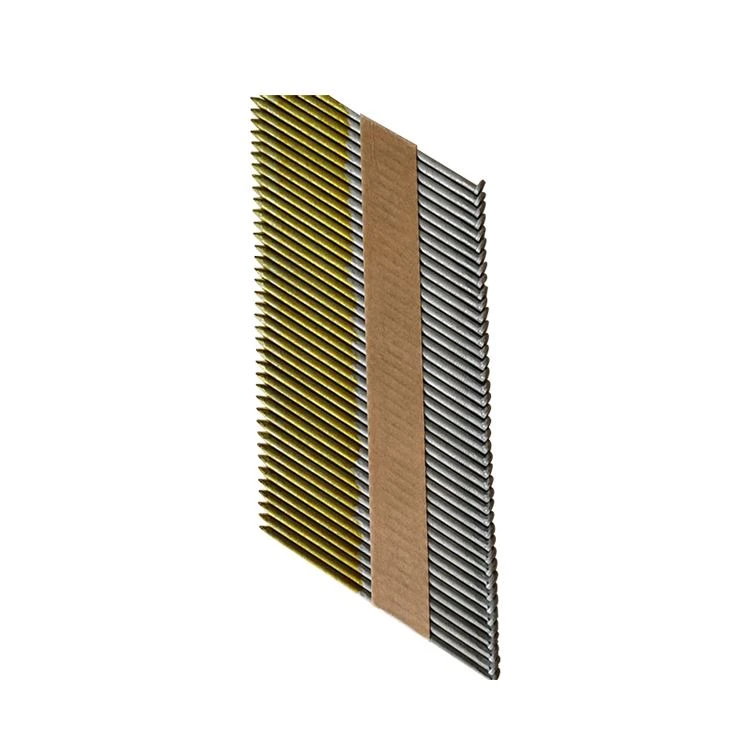
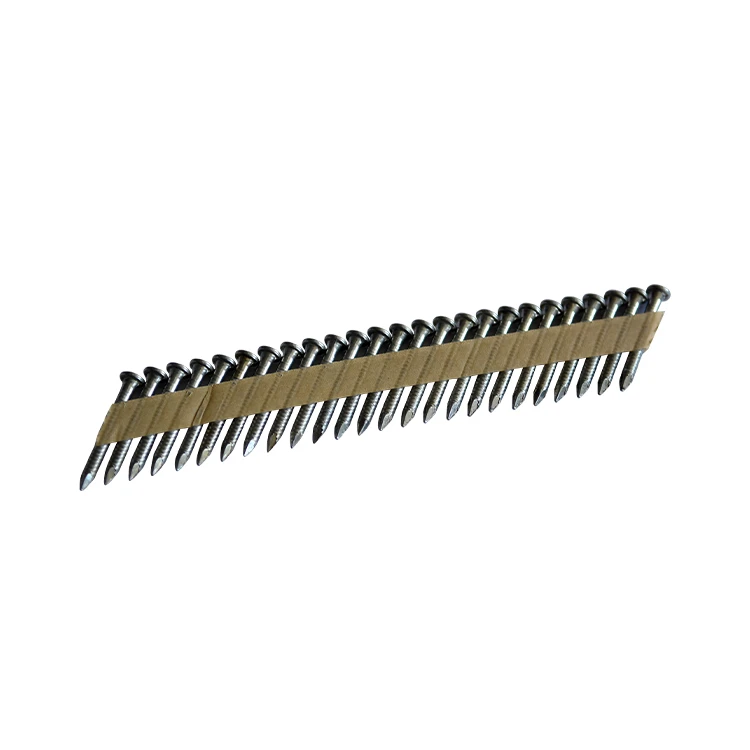
The rust not only compromises the structural integrity of the nails but also can cause aesthetic issues. For example, in outdoor wooden structures, rust stains can seep into the wood, making it look unsightly. Moreover, as the nails corrode, they may lose their grip, leading to loosening of the joints they are holding together.
Types of Collated Framing Nails and Their Performance
Ring Shank Framing Nails
Ring Shank Framing Nails are known for their excellent holding power. The rings on the shank of the nail increase the friction between the nail and the wood, providing a stronger grip compared to smooth - shank nails. In a salt - water environment, the performance of ring shank framing nails depends largely on their coating.
If the ring shank nails are made of a standard steel without any protective coating, they will corrode relatively quickly in salt - water. However, many ring shank nails are available with corrosion - resistant coatings. For instance, some are galvanized, which means they are coated with a layer of zinc. Zinc acts as a sacrificial anode, corroding in place of the steel beneath it. This provides a certain level of protection against the corrosive effects of salt - water.
In real - world applications, ring shank framing nails with proper coatings have been found to maintain their holding power for a reasonable period in coastal construction projects. However, over time, especially in areas with high salt - water exposure, the coating may wear off, and corrosion may start to occur. Regular inspections are necessary to ensure the continued integrity of the joints.
Bright Coated Framing Nails
Bright Coated Framing Nails are typically made of steel with a thin, shiny coating. This coating is mainly for aesthetic purposes and provides limited protection against corrosion. In a salt - water environment, bright coated framing nails are highly susceptible to rusting.
The thin coating can be easily damaged during installation, exposing the underlying steel to the corrosive salt - water. Once the steel is exposed, corrosion starts rapidly. As a result, bright coated framing nails are not recommended for use in salt - water environments unless they are used in a protected area where they are not directly exposed to salt - water spray or immersion.
Vinyl Coated Framing Nails
Vinyl Coated Framing Nails offer a different approach to corrosion resistance. The vinyl coating acts as a physical barrier between the nail and the salt - water. It prevents the salt - water from coming into direct contact with the metal, reducing the likelihood of corrosion.
However, the effectiveness of the vinyl coating depends on its quality and thickness. A thin or damaged vinyl coating may not provide adequate protection. In addition, the vinyl coating may degrade over time due to exposure to sunlight, heat, and mechanical stress. Despite these limitations, vinyl coated framing nails can perform well in salt - water environments if they are properly installed and maintained.
Factors Affecting Nail Performance in Salt - Water
Exposure Level
The degree of exposure to salt - water is a significant factor. Nails that are constantly submerged in salt - water will corrode much faster than those that are only exposed to occasional salt - water spray. For example, in a pier construction project, the nails at the waterline are exposed to the most severe conditions, as they are in contact with both salt - water and air, which accelerates the corrosion process.
Wood Type
The type of wood used in conjunction with the nails can also affect their performance. Some woods, such as cedar and redwood, contain natural oils and tannins that have some anti - fungal and anti - corrosive properties. These woods can provide an additional layer of protection to the nails. On the other hand, softwoods like pine may absorb more moisture, which can increase the humidity around the nails and promote corrosion.
Installation Method
Proper installation is crucial for the long - term performance of collated framing nails in salt - water environments. Nails that are driven too deeply or at an angle may cause damage to the coating, exposing the metal to corrosion. Additionally, over - tightening or under - tightening the joints can put stress on the nails, which may lead to premature failure.
Real - World Case Studies
In a coastal housing project, a contractor used ring shank framing nails with a high - quality galvanized coating. The house was located near the beach, where it was exposed to salt - water spray on a regular basis. After five years, an inspection revealed that most of the nails were still in good condition, with only minor signs of corrosion on the edges of the coating. The joints remained secure, and the overall structure was still stable.
In contrast, another project in a similar coastal area used bright coated framing nails. After just two years, many of the nails had started to rust, and some of the joints had become loose. The contractor had to replace a significant number of nails to ensure the safety of the structure.
Recommendations for Using Collated Framing Nails in Salt - Water Environments
- Choose the Right Nail Type: Opt for nails with corrosion - resistant coatings, such as galvanized ring shank nails or vinyl coated nails. Avoid using bright coated nails in direct salt - water exposure.
- Inspect Regularly: Conduct regular inspections of the nails and joints to detect any signs of corrosion or loosening early. Replace any damaged or corroded nails promptly.
- Proper Installation: Follow the manufacturer's instructions for nail installation to ensure that the coating is not damaged and the nails are driven correctly.
- Consider Wood Selection: Use woods with natural anti - corrosive properties to provide additional protection to the nails.
Conclusion
As a supplier of collated framing nails, I understand the importance of choosing the right nails for salt - water environments. While no nail is completely immune to the corrosive effects of salt - water, with proper selection, installation, and maintenance, collated framing nails can perform well and provide long - lasting support for construction projects in coastal areas.
If you are planning a construction project in a salt - water environment and need high - quality collated framing nails, please feel free to contact us for more information and to discuss your specific requirements. We are committed to providing you with the best solutions for your construction needs.
References
- ASTM International. (20XX). Standard specifications for nails and spikes.
- Building Science Corporation. (20XX). Corrosion of fasteners in building construction.
- National Association of Home Builders. (20XX). Best practices for coastal construction.