

Hey there, fellow DIY enthusiasts and construction pros! I'm a supplier of collated framing nails, and today, I want to dive into a hot topic: how do collated framing nails stack up against staples when it comes to holding power?
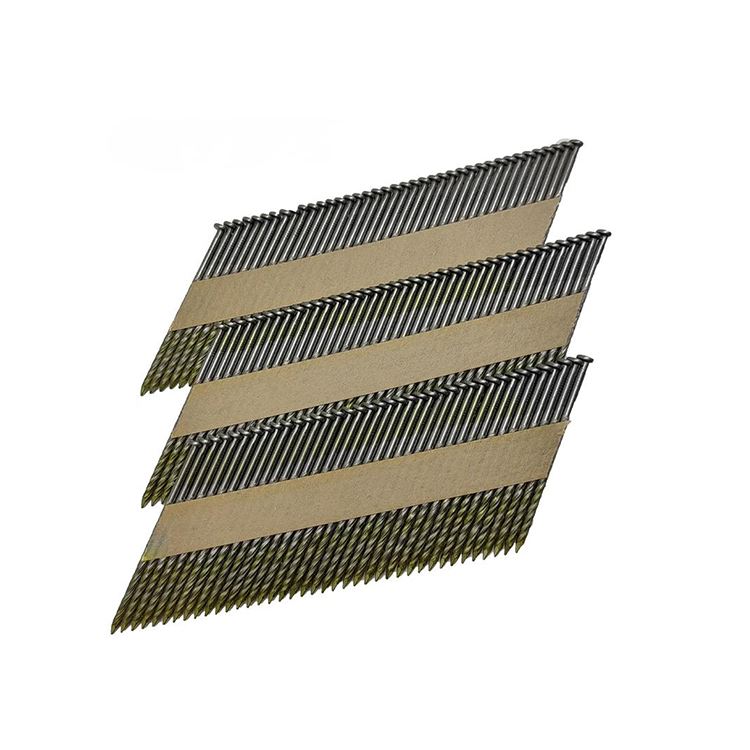
Let's start by getting a clear understanding of what we're dealing with. Collated framing nails are nails that are held together in a strip or coil, usually with paper, plastic, or wire. This collation makes them easy to load into a nail gun, which speeds up the construction process. On the other hand, staples are U - shaped fasteners that are also commonly used in construction and DIY projects.
The Science of Holding Power
Holding power is all about how well a fastener can keep two or more materials together over time. It's influenced by several factors, including the material of the fastener, its shape, and the way it's installed.
Material
Collated framing nails come in a variety of materials. For example, Ring Hot Dipped Galvanized Nails are made of steel that's been coated with a layer of zinc through a hot - dipping process. This zinc coating not only protects the nail from rust and corrosion but also gives it some extra strength. The ring shank design provides better grip within the wood fibers, which significantly enhances the holding power.
Staples, on the other hand, are often made of thinner gauge steel. While they can be strong, the thinner material may not offer the same level of long - term holding power as a well - made framing nail, especially in heavy - duty applications.
Shape
The shape of a fastener plays a huge role in its holding power. Collated framing nails are typically straight and have a pointed tip. When driven into the material, the point helps to penetrate easily, and the shaft of the nail holds the materials together. Some nails, like the 30 Degree Framing Nails, are angled, which can be useful for certain applications where a straight nail might not work as well.
Staples have a U - shape. This shape can be effective for holding thin materials together, like attaching fabric or thin wood panels. However, in applications where you need to hold thick or heavy materials, the U - shape may not distribute the load as evenly as a nail, leading to a weaker hold.
Installation
Proper installation is key to getting the most holding power out of any fastener. Collated framing nails are designed to be used with a nail gun, which can drive the nail into the material with a lot of force. This ensures that the nail is fully seated and can provide maximum holding power.
Staples are also installed using a staple gun. But the force of a staple gun may not be as consistent as that of a nail gun, especially when dealing with harder materials. If a staple isn't driven in all the way, it won't hold as well, and it may even come loose over time.
Real - World Applications
Let's look at some common construction and DIY scenarios to see how collated framing nails and staples compare in terms of holding power.
Framing
When it comes to framing a house or building a wooden structure, collated framing nails are the clear winner. The holding power of nails is crucial in this application because the structure needs to be able to withstand a lot of stress, such as the weight of the building itself and external forces like wind and earthquakes. Paper Collated Framing Nails are a popular choice for framing because they're easy to load into a nail gun and can provide a strong hold.
Staples are generally not used for framing because they don't have the necessary holding power. The U - shape of staples makes them more suitable for lighter tasks, and they wouldn't be able to keep the heavy framing members together securely.

Sheathing
Sheathing is the process of covering the frame of a building with plywood or other panels. Collated framing nails are again the preferred choice here. They can hold the sheathing firmly in place, preventing it from shifting or coming loose. The long - term holding power of nails is important because the sheathing helps to give the building its structural integrity.
Staples can be used for sheathing in some cases, but they're usually only suitable for temporary applications or for very small projects. In a permanent building, staples may not be able to provide the same level of security as nails.
Fencing
For building a fence, collated framing nails are a great option. They can hold the fence posts and panels together tightly, even in windy conditions. The strong holding power of nails ensures that the fence will last for a long time without falling apart.
Staples can be used for attaching small decorative elements to a fence, but for the main structure of the fence, they're not a good choice. The holding power of staples is just not sufficient to keep the heavy fence components in place.
Advantages of Collated Framing Nails
- Superior Holding Power: As we've seen, collated framing nails generally have better holding power than staples, especially in heavy - duty applications. This means that your projects will be more durable and long - lasting.
- Versatility: Collated framing nails come in different sizes, shapes, and materials, which makes them suitable for a wide range of applications. Whether you're building a house, a piece of furniture, or a small DIY project, there's a framing nail that's right for the job.
- Ease of Use: The collation of framing nails makes them easy to load into a nail gun, which saves time and effort. You can work faster and more efficiently, especially on large projects.
Advantages of Staples
- Quick Installation: Staples can be installed very quickly, which can be an advantage for small projects or for tasks where you need to make a lot of fast connections.
- Good for Thin Materials: Staples are great for holding thin materials together, like attaching insulation or thin wood veneers. Their U - shape is well - suited for these types of applications.
Conclusion
In conclusion, when it comes to holding power, collated framing nails generally outperform staples, especially in heavy - duty and long - term applications. However, staples still have their place in certain situations, like for quick, temporary fixes or for working with thin materials.
If you're in the market for high - quality collated framing nails, I'd love to talk to you. Whether you're a professional contractor or a DIY enthusiast, I can help you find the right nails for your project. Reach out to me to start a conversation about your procurement needs.
References
- "Building Construction Handbook" by Edward Allen and Joseph Iano
- "The Complete Guide to DIY Home Improvement" by Reader's Digest