

In the realm of construction and carpentry, the choice between smooth coil nails and staples is a critical decision that can significantly impact the quality and durability of a project. As a supplier of Smooth Coil Nails, I've witnessed firsthand the varying preferences and debates among professionals and DIY enthusiasts alike. This blog aims to delve into the question: Do smooth coil nails hold better than staples? By examining their characteristics, performance in different applications, and the science behind their holding power, we can make an informed choice.
Understanding Smooth Coil Nails and Staples
Smooth Coil Nails
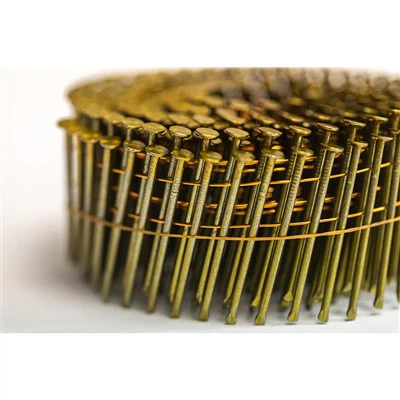
Smooth coil nails are a type of fastener commonly used in construction. They are typically made of steel and come in a coil form, which allows for easy loading into nail guns. The smooth shank design means that there are no threads or barbs on the nail, which gives it a sleek appearance. There are different types of smooth coil nails available, such as Non-standard Smooth Coil Nails, Chisel Point Smooth Coil Nails, and Coil Nail Yellow Coated Smooth Shank. Each type has its own unique features and is suitable for specific applications.
Staples
Staples, on the other hand, are U-shaped fasteners that are often used for lighter-duty applications. They are available in various sizes and gauges, and can be made from different materials such as steel or aluminum. Staples are typically used with staple guns, which can be manual or pneumatic.
Factors Affecting Holding Power
Material and Surface
The material of the workpiece and its surface characteristics play a crucial role in determining the holding power of both smooth coil nails and staples. For example, when working with softwoods like pine, both fasteners can provide a relatively good hold. However, in hardwoods such as oak, smooth coil nails may have an advantage. The smooth shank of the nail can penetrate the dense wood fibers more easily and create a tight fit, while staples may struggle to fully penetrate or may cause the wood to split.
Fastener Design
The design of the fastener itself also affects its holding power. Smooth coil nails have a single point of contact with the workpiece, which allows for a more concentrated force to be applied during installation. This can result in a stronger hold, especially in applications where the joint is subject to shear forces. Staples, with their U-shaped design, distribute the force over a wider area. While this can be beneficial in some applications, such as attaching thin materials like fabric or paper, it may not provide as strong a hold in heavy-duty construction.

Installation Method
Proper installation is essential for maximizing the holding power of both smooth coil nails and staples. When using smooth coil nails, the angle and depth of penetration are critical. If the nail is not driven straight or deep enough, it may not hold securely. Similarly, staples need to be installed at the correct angle and with the appropriate amount of force. A staple that is not fully driven or is installed at an incorrect angle may not provide the desired holding power.
Performance in Different Applications
Framing
In framing applications, where strength and durability are of utmost importance, smooth coil nails are often the preferred choice. The ability of smooth coil nails to penetrate deep into the wood and provide a strong hold makes them ideal for joining large structural members. For example, when building a house frame, smooth coil nails can ensure that the studs, joists, and rafters are securely connected. Staples, on the other hand, are generally not recommended for framing due to their lower holding power and the potential for the joint to loosen over time.
Sheathing
When it comes to sheathing, such as attaching plywood or OSB panels to the frame, both smooth coil nails and staples can be used. However, smooth coil nails are often preferred for their better holding power. The nails can penetrate the sheathing material and the underlying frame, creating a more secure connection. This is especially important in areas prone to high winds or seismic activity, where the sheathing needs to be firmly attached to the frame to prevent damage.
Finishing Work
In finishing work, such as installing trim or molding, the choice between smooth coil nails and staples depends on the aesthetic and functional requirements of the project. Smooth coil nails are often used when a more discreet fastening method is desired. The small hole left by the nail can be easily filled and sanded, leaving a smooth surface. Staples, on the other hand, may leave a more visible mark and are generally used for less visible areas or in applications where a quick and easy installation is required.
Advantages of Smooth Coil Nails
Strong Holding Power
As mentioned earlier, smooth coil nails offer excellent holding power, especially in heavy-duty applications. Their ability to penetrate deep into the material and create a tight fit makes them ideal for projects that require a strong and durable connection.
Versatility
Smooth coil nails are available in a wide range of sizes and lengths, making them suitable for various applications. Whether you're working on a small DIY project or a large-scale construction job, there is a smooth coil nail that can meet your needs.
Compatibility with Nail Guns
Smooth coil nails are designed to be used with nail guns, which makes the installation process fast and efficient. Nail guns can drive nails quickly and accurately, reducing the time and effort required for manual nailing.
Disadvantages of Smooth Coil Nails
Higher Cost
Compared to staples, smooth coil nails can be more expensive. This is due to the manufacturing process and the materials used. However, the higher cost is often justified by the superior holding power and durability of the nails.
Potential for Splitting
In some cases, smooth coil nails may cause the workpiece to split, especially when used in hardwoods or when driven too close to the edge of the material. To prevent splitting, it is important to pre-drill holes or use nails with a smaller diameter.
Advantages of Staples
Quick Installation
Staples can be installed quickly and easily, especially when using a staple gun. This makes them a popular choice for applications where speed is of the essence, such as attaching insulation or securing fabric.
Lower Cost
Staples are generally less expensive than smooth coil nails, making them a cost-effective option for projects with a limited budget.
Suitable for Light-Duty Applications
Staples are well-suited for light-duty applications, such as attaching thin materials or for temporary fastening. They can provide a sufficient hold for these types of projects without the need for a more heavy-duty fastener.
Disadvantages of Staples
Lower Holding Power
Compared to smooth coil nails, staples generally have lower holding power. This makes them less suitable for heavy-duty applications or for joints that are subject to high stress.
Limited Aesthetic Appeal
Staples can leave a more visible mark on the workpiece, which may not be desirable in applications where a clean and professional appearance is required.
Conclusion
In conclusion, the question of whether smooth coil nails hold better than staples depends on the specific application and requirements of the project. Smooth coil nails offer superior holding power, versatility, and are well-suited for heavy-duty construction and framing applications. Staples, on the other hand, are quick to install, cost-effective, and are ideal for light-duty applications.
As a supplier of Smooth Coil Nails, I understand the importance of choosing the right fastener for the job. If you're unsure which type of fastener is best for your project, I encourage you to reach out and discuss your needs. Our team of experts can provide you with personalized advice and help you select the most suitable smooth coil nails for your application. Whether you're a professional contractor or a DIY enthusiast, we're here to support you in achieving the best results for your projects. Contact us today to start a conversation about your fastener needs and explore our range of high-quality Smooth Coil Nails.
References
- Engineering Handbook of Fastening Technology, edited by Peter H. Radzwill.
- Wood Handbook: Wood as an Engineering Material, by the Forest Products Laboratory.
- Construction Fasteners and Tools: A Practical Guide, by John S. Dakin.