

Screw shank coil nails have gained significant popularity in the construction industry, especially when it comes to working with pressure - treated wood. As a supplier of screw shank coil nails, I've had numerous inquiries regarding their performance with this type of wood. In this blog, I'll delve into the details to help you understand whether screw shank coil nails work well with pressure - treated wood.
Understanding Pressure - Treated Wood
Pressure - treated wood is a type of lumber that has been infused with chemicals through a pressure - treatment process. This treatment is designed to protect the wood from decay, rot, and insect damage, making it a popular choice for outdoor projects such as decks, fences, and retaining walls. The chemicals used in the treatment can vary, but common ones include alkaline copper quaternary (ACQ), copper azole (CA), and chromated copper arsenate (CCA, which is less commonly used due to environmental concerns).
Advantages of Screw Shank Coil Nails
Screw shank coil nails offer several advantages over traditional smooth - shank nails. The threaded shank of these nails provides better holding power. When driven into wood, the threads bite into the wood fibers, creating a mechanical bond that resists withdrawal forces. This is particularly important in applications where the wood may be subject to movement or stress, such as in outdoor structures exposed to wind, rain, and temperature changes.
Another advantage is the ease of installation. Coil nails are typically used with pneumatic nail guns, which can drive the nails quickly and efficiently. The coil design allows for a large number of nails to be loaded into the nail gun at once, reducing the need for frequent reloading and increasing productivity on the job site.
Compatibility with Pressure - Treated Wood
One of the main concerns when using nails with pressure - treated wood is corrosion. The chemicals in the pressure - treatment process can be corrosive to certain metals. If the nails are not made from a corrosion - resistant material, they can rust and deteriorate over time, which can compromise the structural integrity of the project.
Fortunately, many screw shank coil nails are available in corrosion - resistant materials such as stainless steel, hot - dipped galvanized steel, and electro - galvanized steel. Stainless steel nails are the most corrosion - resistant option, but they can also be more expensive. Hot - dipped galvanized nails have a thick layer of zinc coating that provides good protection against corrosion, while electro - galvanized nails have a thinner zinc coating and are generally more affordable.
When choosing screw shank coil nails for pressure - treated wood, it's important to select nails that are specifically labeled as suitable for use with this type of wood. These nails are designed to withstand the corrosive effects of the pressure - treatment chemicals and ensure long - term performance.
Performance in Different Applications
Let's take a look at how screw shank coil nails perform in some common applications involving pressure - treated wood.
Decking
Decks are one of the most popular uses for pressure - treated wood. Screw shank coil nails are an excellent choice for decking installation. The threaded shank provides a strong hold, preventing the deck boards from shifting or separating over time. The corrosion - resistant options ensure that the nails will not rust, even when exposed to moisture from rain, snow, or cleaning.
For decking, you can consider using Screw Shank Roofing Nails. These nails are designed to provide a secure fastening for roofing materials, but they can also be used effectively for decking. The sharp point and threaded shank make them easy to drive into the pressure - treated wood, and the corrosion - resistant coating ensures long - term durability.
Fencing
Fences made from pressure - treated wood also benefit from the use of screw shank coil nails. The nails' holding power helps to keep the fence panels in place, even in high - wind areas. The threaded shank resists the natural movement of the wood due to changes in humidity and temperature, reducing the likelihood of the fence panels becoming loose or sagging.
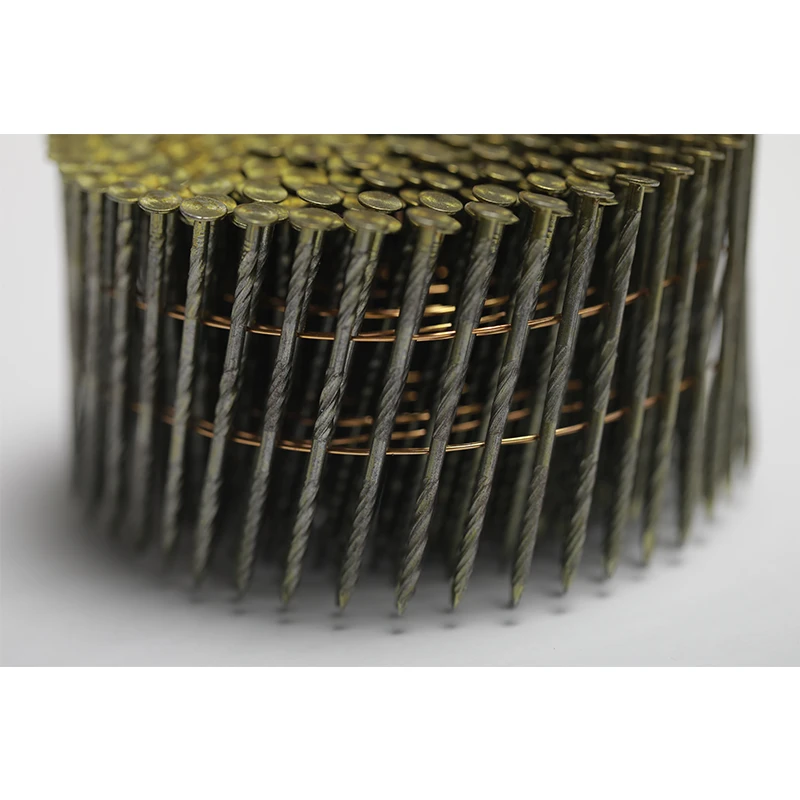

Diamond Point Screw Shank Coil Nails are a great option for fencing. The diamond point makes it easier to start the nail in the wood, and the threaded shank provides a strong grip. The corrosion - resistant coating protects the nails from the elements, ensuring that the fence remains sturdy for years to come.
Retaining Walls
Retaining walls are another application where screw shank coil nails can be used effectively with pressure - treated wood. The nails help to hold the wall panels together, providing stability and preventing the wall from collapsing. The threaded shank of the nails resists the lateral forces exerted by the soil behind the wall, ensuring that the wall remains in place.
2.5mmx57mm Screw Shank Coil Nails are suitable for retaining wall construction. The size of the nails provides the right balance of strength and ease of installation. The corrosion - resistant coating protects the nails from the damp soil environment, ensuring long - term performance.
Factors Affecting Performance
While screw shank coil nails generally work well with pressure - treated wood, there are some factors that can affect their performance.
Wood Moisture Content
The moisture content of the pressure - treated wood can have an impact on the performance of the nails. If the wood is too wet when the nails are installed, the wood may shrink as it dries, which can loosen the nails over time. It's recommended to allow the pressure - treated wood to dry to a moisture content of around 15 - 20% before installing the nails.
Nail Size and Length
Choosing the right nail size and length is crucial for optimal performance. The nail should be long enough to penetrate the wood sufficiently and provide a strong hold, but not so long that it causes splitting or damage to the wood. The diameter of the nail should also be appropriate for the thickness of the wood being used.
Installation Technique
Proper installation technique is also important. The nails should be driven straight into the wood at the correct angle and depth. If the nails are driven at an angle or not fully seated, it can reduce their holding power and increase the risk of the wood splitting.
Conclusion
In conclusion, screw shank coil nails can work very well with pressure - treated wood, provided that the right nails are chosen and the installation is done correctly. The threaded shank provides excellent holding power, and the availability of corrosion - resistant materials ensures long - term durability. Whether you're building a deck, a fence, or a retaining wall, screw shank coil nails can be a reliable choice for your pressure - treated wood projects.
If you're interested in purchasing high - quality screw shank coil nails for your pressure - treated wood projects, I encourage you to contact us for more information and to discuss your specific needs. We have a wide range of options available to meet your requirements and ensure the success of your project.
References
- "Pressure - Treated Wood: A Guide to Selection and Use" by the American Wood Council.
- "Nail Selection and Installation for Pressure - Treated Wood" by the National Association of Home Builders.
- "Corrosion of Fasteners in Pressure - Treated Wood" by the Forest Products Laboratory.