

Hey there! As a supplier of Ring Shank Coil Nails, I often get asked if these nails work well in softwood. Well, let's dive right into it and find out.
First off, let's understand what softwood is. Softwood comes from coniferous trees like pine, spruce, and fir. These woods are generally lighter, less dense, and more flexible compared to hardwoods. They're also commonly used in construction for things like framing, decking, and making pallets because they're more affordable and easier to work with.
Now, what makes Ring Shank Coil Nails special? The ring shank design is the key. Unlike smooth - shank nails, ring shank nails have a series of rings or spirals along the shank. These rings act like tiny barbs that grip the wood as the nail is driven in. This provides extra holding power, making the nail less likely to pull out over time.

So, how do they perform in softwood?

Holding Power
One of the biggest advantages of using ring shank coil nails in softwood is their superior holding power. Softwood has a more porous and less dense structure. When you drive a smooth - shank nail into softwood, it can sometimes be a bit too easy for the nail to work its way out due to vibrations, changes in temperature, or the natural movement of the wood.
With ring shank nails, those rings dig into the softwood fibers, creating a much stronger bond. Whether you're building a wooden shed or a pallet, this extra holding power ensures that your structure stays intact for a long time. For example, if you're using Ring Shank 2''x.099'' Wire Pallet Coil Nails to assemble a pallet, the ring shanks will keep the boards firmly together, even when the pallet is being moved around and loaded with heavy items.
Resistance to Withdrawal
Softwood can be prone to the nails pulling out, especially in high - stress situations. Ring shank coil nails offer excellent resistance to withdrawal. The rings on the shank create friction against the wood fibers, which means it takes a lot more force to pull the nail out compared to a smooth - shank nail.
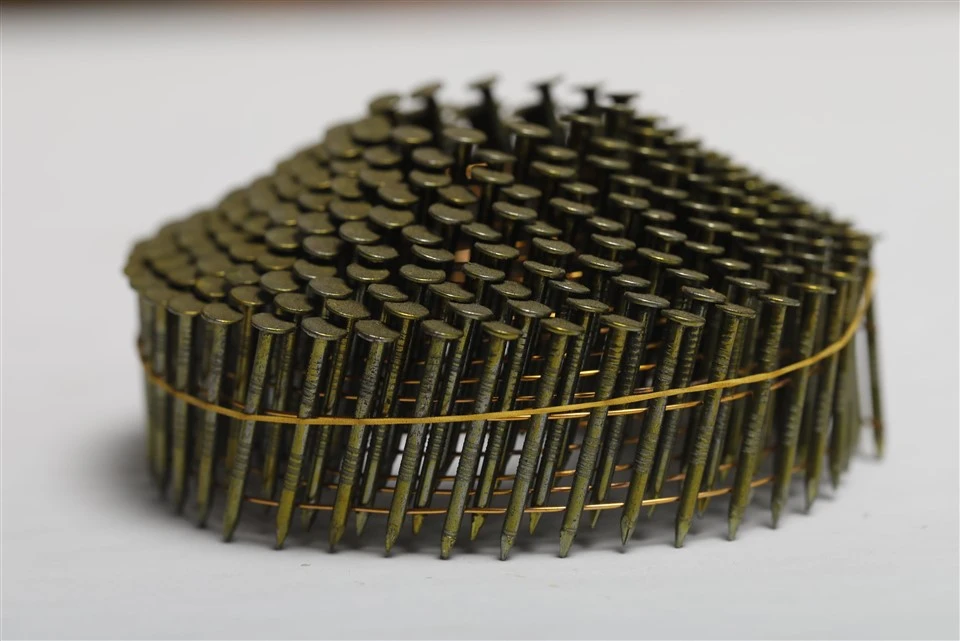
Let's say you're building a deck using softwood boards. Over time, the deck will be exposed to foot traffic, weather changes, and other forces. Ring shank nails will hold the boards in place better, reducing the risk of loose boards and potential safety hazards. Our Ring Shank 2 1/4''x.099'' Wire Pallet Coil Nails are a great choice for such applications, as they can handle the stress and keep the deck stable.
Ease of Installation
You might think that the ring shank design would make it harder to install the nails in softwood. But actually, it's not that bad. Most modern nail guns are designed to handle ring shank nails just fine. The key is to use the right nail gun with the appropriate settings for the size and type of nail.
When you're driving ring shank nails into softwood, the wood is soft enough to allow the rings to penetrate without too much resistance. You'll still need to make sure that the nail is driven in straight, but overall, the installation process is quite straightforward. Our 2.1x32mm/2.1x38mm Conical (dome) Ring Shank Wire Coil Nails are easy to load into a compatible nail gun and are a great option for quick and efficient installation in softwood projects.
Durability
Softwood is more susceptible to damage from moisture and insects. However, ring shank coil nails can contribute to the overall durability of a softwood structure. By providing a strong connection between the wood pieces, they help prevent the wood from shifting and splitting.
In a humid environment, softwood can swell and shrink. If the nails aren't holding the structure together properly, this movement can cause the wood to crack. Ring shank nails keep the wood in place, reducing the likelihood of such damage. They also help maintain the integrity of the structure, even when exposed to the elements over time.
Potential Drawbacks
Of course, no product is perfect. One potential drawback of using ring shank coil nails in softwood is that they can sometimes cause the wood to split, especially if the nail is too large or if it's driven too close to the edge of the wood. To avoid this, it's important to choose the right nail size for the thickness of the softwood and to follow the proper installation guidelines.
Another thing to consider is that ring shank nails can be a bit more expensive than smooth - shank nails. However, when you factor in the extra holding power and durability they provide, the cost is often worth it, especially for long - term projects.
Conclusion
In conclusion, ring shank coil nails work really well in softwood. Their superior holding power, resistance to withdrawal, ease of installation, and contribution to durability make them a great choice for a wide range of softwood projects. Whether you're a professional contractor or a DIY enthusiast, using ring shank coil nails can help you create stronger, more reliable structures.
If you're interested in purchasing high - quality ring shank coil nails for your softwood projects, feel free to get in touch with us. We're here to answer any questions you might have and to help you find the right nails for your specific needs. Let's work together to make your next project a success!
References
- "Wood Handbook: Wood as an Engineering Material", Forest Products Laboratory
- "Nail Selection Guide", National Nail Manufacturers Association