

Hey there! As a threaded nail supplier, I often get asked whether threaded nails can be used in wood. Well, the short answer is yes, but there's a lot more to it than that. In this blog post, I'll dive deep into the world of threaded nails and wood, exploring their compatibility, benefits, and some tips on how to use them effectively.
Why Threaded Nails Are a Great Choice for Wood
First off, let's talk about what makes threaded nails so special when it comes to wood. Unlike regular nails, threaded nails have a helical thread running along their shank. This thread serves several important purposes.
One of the main advantages is the increased holding power. When you drive a threaded nail into wood, the threads bite into the wood fibers, creating a much stronger grip compared to a smooth - shank nail. This is especially useful in applications where the joint needs to withstand a lot of stress, like in furniture construction or framing.
Another benefit is the reduced risk of splitting. The threads help to distribute the force more evenly as the nail is driven into the wood. This means that even in hardwoods or when nailing near the edge of a board, there's a lower chance of the wood splitting.
Types of Threaded Nails for Wood
There are different types of threaded nails available, each suited for specific woodworking tasks.
One popular option is the 3 Coil Nails. These are coil - shaped nails that are often used in pneumatic nail guns. The coil design allows for a large number of nails to be loaded into the gun, making them ideal for large - scale projects like decking or roofing. The threaded shank provides excellent holding power, ensuring that the boards stay firmly in place.
If you're working on pallets, the Screw Shank 2 1/4''x.099'' Wire Pallet Coil Nails are a great choice. The specific size and thread design are optimized for pallet construction, providing a secure connection between the pallet boards.
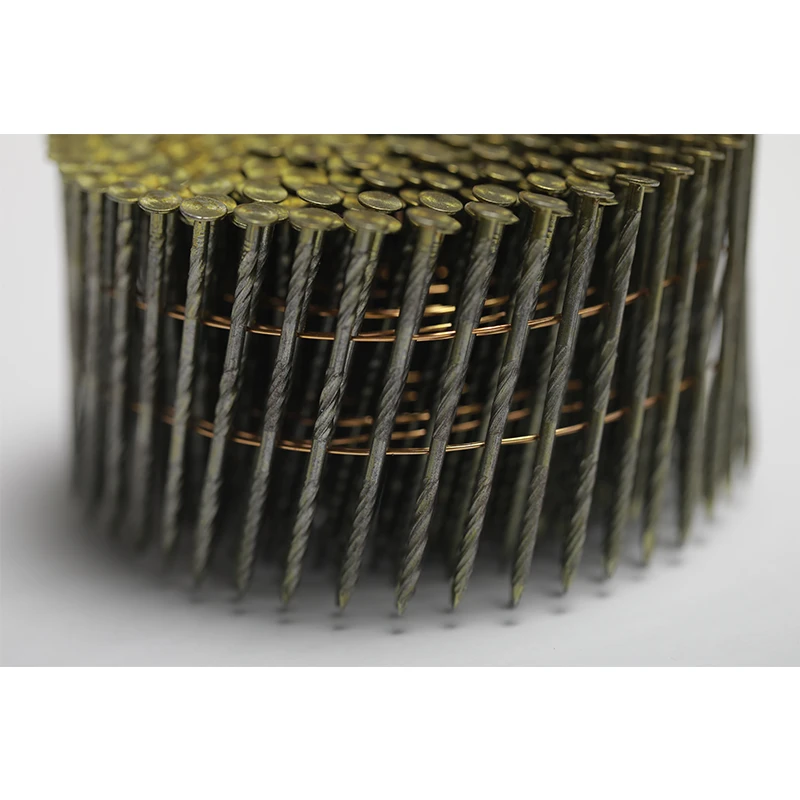

For more general woodworking tasks, the 2.5mmx57mm Screw Shank Coil Nails offer a good balance of size and holding power. They can be used in a variety of wood types, from softwoods to hardwoods, and are suitable for tasks like attaching trim or small wooden components.
Choosing the Right Threaded Nails for Your Wood Project
When selecting threaded nails for your wood project, there are a few factors to consider.
Wood Type
The type of wood you're working with matters a lot. Softwoods like pine or cedar are generally easier to nail into, and you can use a wider range of nail sizes and thread designs. Hardwoods like oak or maple, on the other hand, are denser and require nails with a stronger thread and often a smaller diameter to avoid splitting.
Project Requirements
Think about the purpose of your project. If it's a structural project, like building a house frame, you'll need nails with high holding power. For non - structural tasks, like attaching a decorative molding, you can choose smaller, less heavy - duty nails.
Nail Size
The length and diameter of the nail are crucial. The nail should be long enough to penetrate through the first piece of wood and into the second piece by at least half its length. The diameter should be appropriate for the wood type and the amount of stress the joint will承受.
How to Use Threaded Nails in Wood
Using threaded nails in wood isn't too different from using regular nails, but there are a few tips to keep in mind.
Pre - Drilling
In some cases, especially with hardwoods or when nailing near the edge of a board, pre - drilling a pilot hole can be a good idea. The pilot hole should be slightly smaller than the diameter of the nail. This helps to prevent splitting and makes it easier to drive the nail in.
Driving the Nail
When using a nail gun, make sure it's set to the correct pressure for the type of wood and nail you're using. If you're using a hammer, use a nail set to sink the nail head below the surface of the wood without damaging it.
Alignment
Ensure that the nail is driven straight into the wood. A crooked nail can weaken the joint and may cause the wood to split.
Potential Drawbacks
While threaded nails have many advantages, there are also a few potential drawbacks. One is that they can be more difficult to remove than regular nails. The threads hold the nail tightly in the wood, so if you need to make changes to your project, it can be a challenge to pull them out.
Another issue is the cost. Threaded nails are generally more expensive than smooth - shank nails. However, considering their increased holding power and reduced risk of splitting, the extra cost can be worth it in many cases.
Conclusion
So, can threaded nails be used in wood? Absolutely! They offer a range of benefits, from increased holding power to reduced splitting, making them a great choice for a variety of woodworking projects. Whether you're a professional carpenter or a DIY enthusiast, using the right threaded nails can make your projects stronger and more durable.
If you're interested in purchasing high - quality threaded nails for your next wood project, feel free to reach out. We're here to help you find the perfect nails for your needs. Contact us to start a procurement discussion and take your woodworking to the next level.
References
- Wood Handbook: Wood as an Engineering Material, United States Department of Agriculture Forest Service
- Woodworking Magazine, various issues on fasteners and wood joints