

When it comes to construction and masonry work, the choice of fasteners is crucial. One question that often arises is whether threaded nails can be used in masonry. As a threaded nail supplier, I've encountered this query numerous times, and I'm here to provide a comprehensive answer based on scientific knowledge and practical experience.
Understanding Threaded Nails
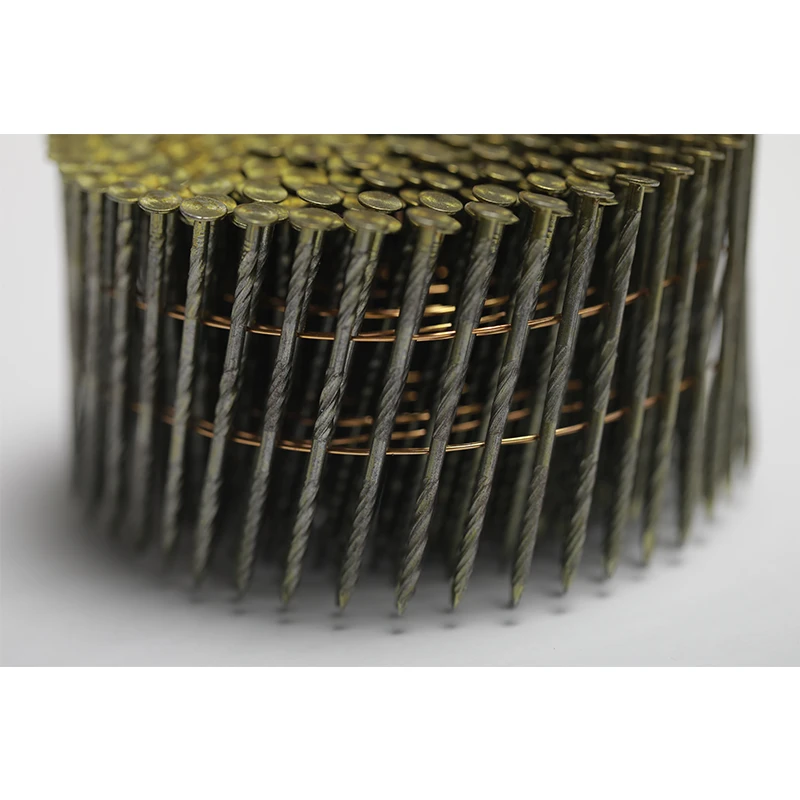
Threaded nails, also known as screw shank nails, are designed with a helical thread along the shank. This unique feature provides several advantages over traditional smooth - shank nails. The threads increase the holding power by creating a greater surface area of contact with the material they are driven into. When a threaded nail is inserted, the threads bite into the surrounding material, offering enhanced resistance to withdrawal forces.
Our company offers a wide range of threaded nails, including Screw Shank 2 1/4''x.099'' Wire Pallet Coil Nails, Screw Shank 2''x.099'' Wire Pallet Coil Nails, and 2.5mmx57mm Screw Shank Coil Nails. These nails are made from high - quality materials, ensuring durability and reliability in various applications.
Masonry: A Unique Material
Masonry refers to structures built from individual units, such as bricks, stones, or concrete blocks, which are bound together by mortar. Masonry materials are known for their hardness, brittleness, and high compressive strength. Unlike wood, which is more flexible and fibrous, masonry has a different set of physical properties that need to be considered when choosing fasteners.
Can Threaded Nails Be Used in Masonry?
The short answer is yes, but with some important considerations.
Advantages of Using Threaded Nails in Masonry
- Increased Holding Power: The threads on the nails can grip the masonry material more effectively than smooth - shank nails. This is especially useful when attaching items that need to withstand significant loads or vibrations. For example, when installing a metal bracket on a brick wall to support a shelf, a threaded nail can provide better stability.
- Reduced Risk of Loosening: Over time, traditional nails in masonry may loosen due to thermal expansion and contraction of the materials. The threads on threaded nails help to counteract this effect by maintaining a tight grip, reducing the likelihood of the fastener coming loose.
Challenges and Limitations
- Installation Difficulty: Masonry is a hard material, and driving a threaded nail into it can be challenging. Special tools, such as a hammer drill with a masonry bit, may be required to pre - drill holes for the nails. Without proper pre - drilling, the nail may bend or break during installation, or it may cause the masonry to crack.
- Material Compatibility: Not all threaded nails are suitable for masonry. The nails need to be made from a material that can withstand the corrosive environment often associated with masonry, such as the alkaline nature of mortar. Stainless steel or galvanized threaded nails are better choices as they offer better corrosion resistance.
- Load - Bearing Capacity: While threaded nails can provide good holding power in masonry, their load - bearing capacity is limited compared to other masonry fasteners, such as masonry anchors. For heavy - duty applications, such as attaching large structural elements to a masonry wall, masonry anchors may be a more appropriate choice.
Factors to Consider When Using Threaded Nails in Masonry
- Nail Size and Type: The size and type of the threaded nail should be chosen based on the thickness and type of the masonry material, as well as the load requirements of the application. For thinner masonry units, smaller nails may be sufficient, while thicker and more massive masonry may require larger and stronger nails.
- Pre - Drilling: As mentioned earlier, pre - drilling is often necessary when using threaded nails in masonry. The diameter of the pre - drilled hole should be slightly smaller than the diameter of the nail to ensure a tight fit. The depth of the hole should also be appropriate to allow the nail to be fully inserted and provide adequate holding power.
- Installation Technique: Proper installation technique is crucial to ensure the effectiveness of the threaded nails. The nail should be driven straight into the pre - drilled hole, and care should be taken not to over - drive or under - drive the nail. Over - driving can cause the masonry to crack, while under - driving may result in insufficient holding power.
Case Studies
Let's look at a couple of real - world examples to illustrate the use of threaded nails in masonry.
Example 1: Interior Wall Decoration
A homeowner wanted to install a wooden picture frame on a brick wall in their living room. They chose to use 2.5mmx57mm Screw Shank Coil Nails for the installation. First, they used a hammer drill with a masonry bit to pre - drill small holes in the brick wall. Then, they carefully inserted the threaded nails into the holes and attached the picture frame. The threaded nails provided enough holding power to keep the frame securely in place, and the installation was quick and easy.
Example 2: Outdoor Fence Attachment
A contractor was building a wooden fence next to a concrete block wall. To attach the fence posts to the wall, they used Screw Shank 2 1/4''x.099'' Wire Pallet Coil Nails. After pre - drilling holes in the concrete blocks, the nails were driven into the holes. The threaded design of the nails helped to prevent the fence posts from loosening due to wind and other external forces.
Conclusion
In conclusion, threaded nails can be used in masonry, but it is essential to understand their advantages, limitations, and the proper installation techniques. When used correctly, threaded nails can offer a cost - effective and practical solution for many masonry applications.
If you are involved in a masonry project and are considering using threaded nails, we invite you to explore our wide range of products. Our team of experts is also available to provide you with technical advice and support. Whether you need assistance in choosing the right nail size and type or have questions about installation, we are here to help. Contact us today to start a discussion about your procurement needs and let us work together to find the best threaded nail solutions for your project.

References
- "Building Construction Handbook" by Edward Allen and Joseph Iano
- "Masonry Design and Detailing" by The Masonry Society