

When it comes to installing paneling, the choice of nails can significantly impact the quality and durability of the project. As a supplier of Smooth Coil Nails, I often receive inquiries about whether these nails are suitable for paneling installation. In this blog post, I'll explore the characteristics of smooth coil nails, their advantages and limitations for paneling, and provide some practical insights to help you make an informed decision.
Understanding Smooth Coil Nails
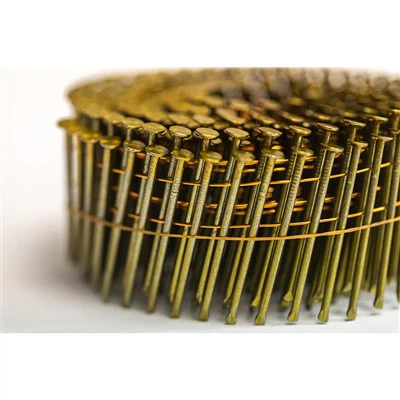
Smooth coil nails are a type of fastener commonly used in construction and woodworking projects. They are typically made of steel and have a smooth shank, which means there are no threads or barbs along the length of the nail. The smooth surface allows the nail to penetrate materials easily, reducing the risk of splitting the wood. These nails are often collated in a coil, which makes them compatible with pneumatic nail guns, enabling rapid and efficient installation.
There are different types of smooth coil nails available, each with its own unique features. For example, Diamond Point Coil Nails have a sharp, diamond-shaped point that provides excellent penetration and holding power. The diamond point helps the nail to easily pierce through the paneling and into the underlying structure, ensuring a secure connection.
Coil Nail Yellow Coated Smooth Shank are coated with a yellow finish, which not only gives them a distinctive appearance but also provides some level of corrosion resistance. This is particularly important if the paneling is installed in an environment where moisture or humidity is a concern.
Chisel Point Smooth Coil Nails have a chisel-shaped point that is designed to cut through materials cleanly. This type of point is ideal for use with harder woods or when a more precise installation is required.
Advantages of Using Smooth Coil Nails for Paneling
One of the primary advantages of using smooth coil nails for paneling installation is their ease of use. The smooth shank allows the nails to slide into the wood smoothly, reducing the amount of force required for installation. This can be especially beneficial when working with large panels or when installing paneling in hard-to-reach areas.
Another advantage is the speed of installation. Since smooth coil nails are collated in a coil, they can be quickly and easily loaded into a pneumatic nail gun. This allows for rapid installation, saving time and labor costs. The ability to drive nails quickly and efficiently can also help to ensure a more consistent and professional-looking finish.
Smooth coil nails also provide a strong and secure hold. When properly installed, they can effectively hold the paneling in place, preventing it from shifting or coming loose over time. This is particularly important for paneling that will be subjected to normal wear and tear, such as in a residential or commercial building.
In addition, smooth coil nails are less likely to cause splitting in the paneling compared to other types of nails. The smooth shank exerts less pressure on the wood as it is driven in, reducing the risk of cracks or damage. This is especially important when working with thin or delicate paneling materials.
Limitations of Using Smooth Coil Nails for Paneling
While smooth coil nails offer many advantages, they also have some limitations. One of the main limitations is their holding power compared to nails with threaded or barbed shanks. Since the smooth shank does not have any features to grip the wood, it may not provide as strong a hold in some applications. This can be a concern in areas where the paneling will be subjected to significant stress or movement, such as in high-traffic areas or in buildings located in seismic zones.
Another limitation is the potential for the nails to back out over time. Without the added grip of a threaded or barbed shank, smooth coil nails may gradually loosen due to vibration or changes in temperature and humidity. This can lead to the paneling becoming loose or warped, which may require additional maintenance or repair.

In some cases, the smooth surface of the nails may also make them more visible on the surface of the paneling. This can be a cosmetic issue, especially if a seamless or invisible finish is desired. To minimize the visibility of the nails, it may be necessary to use a putty or filler to cover the nail holes after installation.
Factors to Consider When Using Smooth Coil Nails for Paneling
When deciding whether to use smooth coil nails for paneling installation, there are several factors to consider. The type of paneling material is an important consideration. Different woods and composite materials have different densities and hardness levels, which can affect the performance of the nails. For example, softer woods may require shorter nails with a smaller diameter, while harder woods may need longer and thicker nails for a secure hold.
The application and location of the paneling also play a role. If the paneling is being installed in an area with high moisture or humidity, such as a bathroom or basement, it is important to choose nails with corrosion-resistant coatings. Additionally, if the paneling will be subjected to heavy use or stress, it may be necessary to use nails with a stronger holding power.
The type of nail gun being used is another factor. Make sure the nail gun is compatible with the size and type of smooth coil nails you plan to use. Using the wrong nail gun can result in improper installation, which can compromise the integrity of the paneling.
Best Practices for Installing Paneling with Smooth Coil Nails
To ensure a successful paneling installation using smooth coil nails, it is important to follow some best practices. First, make sure the paneling and the underlying structure are clean and free of debris. This will help the nails to penetrate the wood more easily and ensure a secure connection.
Measure and mark the locations where the nails will be installed. This will help to ensure a consistent and even spacing between the nails. It is generally recommended to space the nails about 6 to 8 inches apart along the edges of the paneling and 12 inches apart in the center.
When using a pneumatic nail gun, adjust the air pressure according to the thickness and hardness of the paneling material. Using too much air pressure can cause the nails to penetrate too deeply or damage the paneling, while using too little pressure may result in the nails not being driven in far enough.
After driving the nails, check to make sure they are flush with the surface of the paneling. If the nails are sticking out, use a nail set to gently tap them below the surface. This will help to prevent the nails from catching on clothing or other objects and will also make it easier to fill the nail holes.
Finally, fill the nail holes with a putty or filler that matches the color of the paneling. This will help to conceal the nails and give the paneling a smooth and professional finish.
Conclusion
In conclusion, smooth coil nails can be a suitable option for installing paneling in many applications. They offer ease of use, speed of installation, and a relatively strong hold. However, it is important to consider the limitations of smooth coil nails and to take into account the specific requirements of your project. By choosing the right type of nails, following best practices for installation, and addressing any potential issues, you can achieve a successful and long-lasting paneling installation.
If you have any questions or need further information about using smooth coil nails for paneling or other construction projects, please feel free to contact us. We are a leading supplier of high-quality smooth coil nails and can provide you with the products and expertise you need for your next project.
References
- Wood Handbook: Wood as an Engineering Material. U.S. Department of Agriculture, Forest Service, Forest Products Laboratory.
- Construction Fastening Handbook. Fastener Training Institute.