

Hey there! As a threaded nail supplier, I often get asked whether self - tapping threaded nails can be used in hard materials. It's a super common question, and today, I'm gonna break it down for you.
First off, let's understand what self - tapping threaded nails are. These nails are designed with a unique threading pattern that allows them to create their own threads as they're driven into the material. Unlike regular nails that rely on friction to stay in place, self - tapping threaded nails cut into the material, providing a much stronger hold.
Now, when it comes to hard materials, things get a bit tricky. Hard materials like hardwoods (think oak, maple, or teak), concrete, and some metals have a high density and strength. This means they offer more resistance when you're trying to drive a nail into them.
Let's start with hardwoods. Self - tapping threaded nails can definitely be used in hardwoods, but there are a few things to keep in mind. The threading on these nails helps them to grip the wood fibers better. When you drive a self - tapping threaded nail into hardwood, the threads cut through the dense wood, creating a tight fit. This is great for applications where you need a strong joint, like building furniture or installing wooden decks.

However, one of the challenges with using self - tapping threaded nails in hardwood is the risk of splitting. Hardwoods are less forgiving than softer woods, and if you drive the nail too quickly or at the wrong angle, the wood can split. To avoid this, it's a good idea to pre - drill a pilot hole. The pilot hole should be slightly smaller than the diameter of the nail. This gives the nail a path to follow and reduces the stress on the wood, minimizing the risk of splitting.
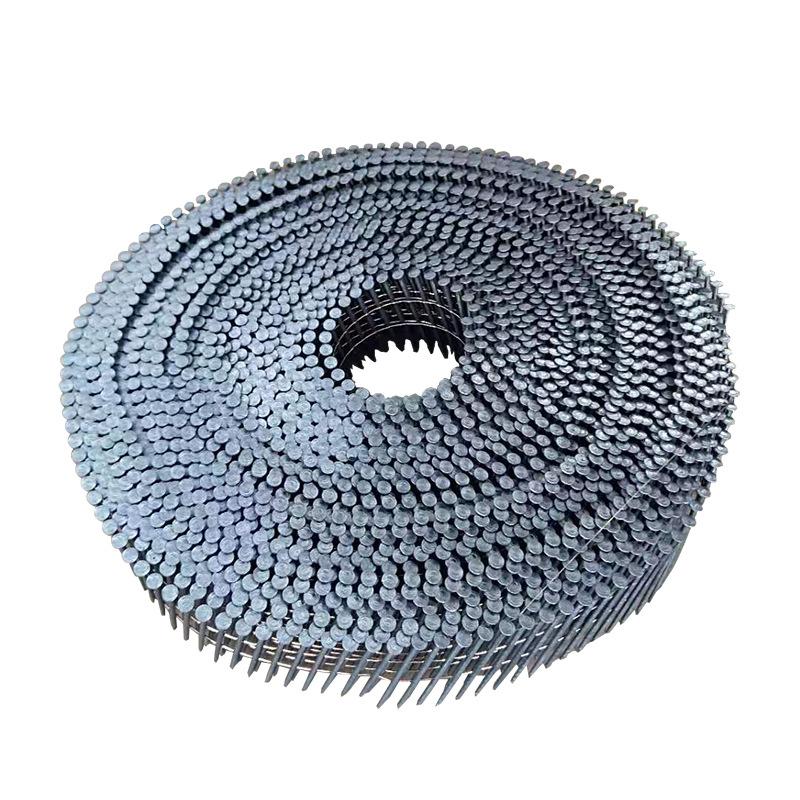
Another factor to consider is the length and diameter of the nail. In hardwoods, you'll usually need a longer and thicker nail compared to softer woods. A longer nail provides more surface area for the threads to grip, and a thicker nail can handle the higher stress. For example, if you're building a heavy - duty wooden structure, you might want to use 3 Coil Nails. These nails are designed to provide a strong hold in dense materials and are a popular choice among contractors.
Moving on to concrete, self - tapping threaded nails can also be used, but it's a whole different ballgame. Concrete is an extremely hard and brittle material. To use self - tapping threaded nails in concrete, you'll need to use a special type of nail that's designed for this purpose. These nails are usually made from high - strength steel and have a sharp, hardened tip.
When driving a self - tapping threaded nail into concrete, you'll need a power tool, like a nail gun or a hammer drill. The power tool provides the force needed to drive the nail through the concrete. However, you still need to be careful. Concrete can crack if you apply too much force or if the nail is not properly aligned.
One option for concrete applications is Chisel Point Screw Shank Coil Nails. The chisel point on these nails makes it easier to penetrate the concrete, and the screw shank provides a strong hold once the nail is in place.
Now, let's talk about metals. Using self - tapping threaded nails in metals is possible, but it depends on the type of metal. Softer metals, like aluminum, are easier to work with compared to harder metals, like stainless steel.
For softer metals, self - tapping threaded nails can be driven in using a hand tool or a power tool. The threads on the nail will cut into the metal, creating a secure connection. However, for harder metals, you'll likely need to pre - drill a hole and use a special type of self - tapping nail. These nails are designed to cut through the tough metal and provide a strong hold. Screw Shank Jumbo Coil Nails are a great option for metal applications, especially for larger projects where you need a high - strength connection.
In conclusion, self - tapping threaded nails can be used in hard materials, but it's important to choose the right nail for the job and follow the proper installation procedures. Whether you're working with hardwoods, concrete, or metals, there are self - tapping threaded nails available that can provide a strong and reliable connection.
If you're in the market for high - quality threaded nails for your next project, I'd love to talk to you. We have a wide range of self - tapping threaded nails that are suitable for various hard materials. Just reach out, and we can discuss your specific needs and find the perfect nails for your application.
References
- Woodworking Handbook: A Guide to Working with Different Types of Wood
- Concrete Construction Manual: Best Practices for Nailing and Fastening in Concrete
- Metalworking Basics: Working with Different Metals and Fasteners