

Are threaded nails stronger than regular nails? This is a question that often comes up in the construction and woodworking industries. As a threaded nail supplier, I've had numerous discussions with contractors, carpenters, and DIY enthusiasts about the relative strengths of these two types of nails. In this blog post, I'll delve into the science behind the strength of threaded nails and regular nails, and provide real - world examples to help you make an informed decision.
Understanding the Basics: Threaded Nails vs. Regular Nails
Let's start by understanding what sets threaded nails and regular nails apart. Regular nails, also known as smooth - shank nails, have a straight, smooth shaft. They are driven into the material using a hammer or a nail gun. The holding power of a regular nail comes from the friction between the nail and the wood fibers. When the nail is driven in, it displaces the wood fibers, and the surrounding fibers grip the nail, providing resistance to pulling out.
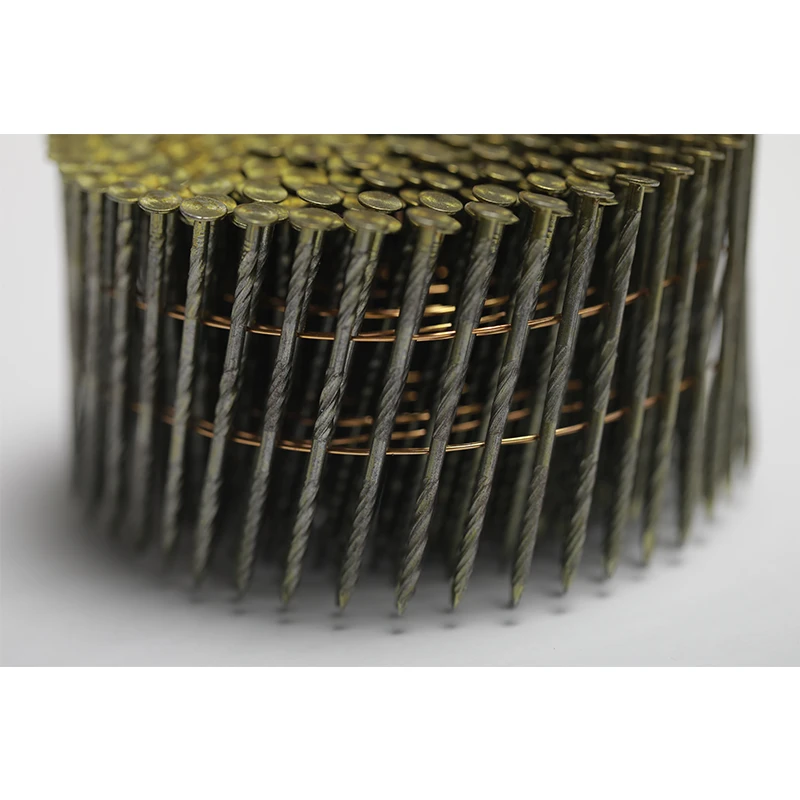
On the other hand, threaded nails, like our 2.5mmx57mm Screw Shank Coil Nails, have a helical thread along the shaft. This design is similar to that of a screw. When a threaded nail is driven or screwed into the material, the threads cut into the wood fibers, creating a mechanical interlock. This interlock is much stronger than the simple friction provided by regular nails.
The Science of Strength
To understand why threaded nails are often stronger, we need to look at the principles of mechanical engineering. When a load is applied to a nailed joint, the goal is to prevent the nail from being pulled out or sheared off.
In the case of regular nails, the force required to pull the nail out depends on the surface area of contact between the nail and the wood and the coefficient of friction. However, over time, the wood may shrink or expand due to changes in humidity, which can reduce the friction and cause the nail to loosen.
Threaded nails, with their helical threads, offer a more secure hold. The threads create multiple points of contact with the wood fibers, distributing the load more evenly. As a result, the nail is less likely to be pulled out under tension. Additionally, the mechanical interlock provided by the threads resists lateral movement, making threaded nails more resistant to shear forces as well.
Real - World Applications
In real - world construction projects, the choice between threaded nails and regular nails can have a significant impact on the durability and strength of the structure.
Framing
In framing applications, where the joints need to withstand heavy loads and vibrations, threaded nails are often the preferred choice. For example, in building a house frame, using Chisel Point Screw Shank Coil Nails can provide a stronger connection between the studs, joists, and rafters. The increased holding power of threaded nails helps to prevent the frame from shifting or coming apart over time, especially in areas prone to earthquakes or high winds.
Decking
When it comes to decking, threaded nails are also a great option. Decks are exposed to the elements, and the wood can expand and contract with changes in temperature and humidity. Regular nails may loosen over time, leading to boards that become loose or uneven. Threaded nails, such as our 3 1/2 Coil Nails, provide a more secure hold, ensuring that the deck boards stay in place and remain stable.

Furniture Making
In furniture making, the strength of the joints is crucial for the overall stability and longevity of the piece. Threaded nails can be used to create strong, durable joints in wooden furniture. They offer a more aesthetically pleasing alternative to screws, as they can be countersunk and filled, leaving a smooth surface.
Factors Affecting Nail Strength
While threaded nails generally offer greater strength, there are several factors that can affect the actual performance of both threaded and regular nails.
Wood Type
The type of wood used can have a significant impact on nail strength. Hardwoods, such as oak and maple, have denser wood fibers, which can provide a better grip for both threaded and regular nails. Softwoods, like pine and cedar, are less dense, and the holding power of nails may be reduced. However, threaded nails still tend to perform better in softwoods compared to regular nails, as the threads can cut into the softer fibers more effectively.
Nail Size and Length
The size and length of the nail also play a role in its strength. Longer nails generally provide more holding power, as they have a greater surface area of contact with the wood. However, it's important to choose the right nail size for the application. Using a nail that is too long can cause the wood to split, while a nail that is too short may not provide enough holding power.
Installation Method
The way the nail is installed can also affect its strength. For regular nails, proper driving technique is essential to ensure that the nail is fully seated and the wood fibers are properly compressed around the nail. For threaded nails, it's important to use the correct tool to drive or screw the nail in, as improper installation can damage the threads and reduce the nail's holding power.
Cost Considerations
One of the main considerations when choosing between threaded nails and regular nails is cost. Threaded nails are generally more expensive than regular nails. This is due to the additional manufacturing process required to create the threads. However, when you consider the long - term benefits of using threaded nails, such as increased durability and reduced maintenance, the higher cost may be justified.
Conclusion
In conclusion, threaded nails are generally stronger than regular nails. Their helical threads create a mechanical interlock with the wood fibers, providing a more secure hold and better resistance to both pulling and shear forces. While they may be more expensive, the increased strength and durability they offer make them a worthwhile investment in many construction and woodworking applications.
If you're interested in learning more about our threaded nails or are looking to place an order for your next project, we'd love to hear from you. Contact us to discuss your specific requirements and get a quote. Our team of experts is ready to assist you in choosing the right threaded nails for your needs.
References
- "Wood Handbook: Wood as an Engineering Material", Forest Products Laboratory
- "Building Construction Illustrated", Francis D.K. Ching